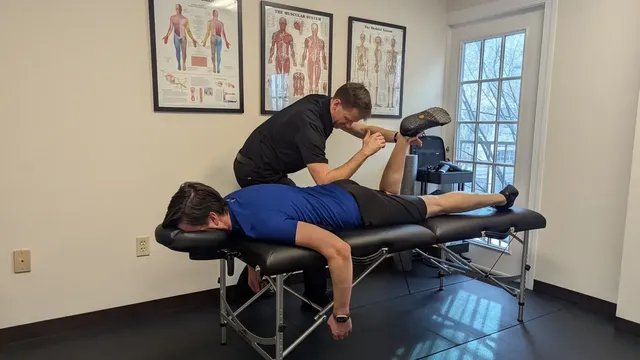
Trigger point therapy is treatment that releases trigger points, the tight, tender knots in muscle that cause local pain and often send pain to other areas. Trigger point therapy can use sustained hand pressure, myofascial release, or dry needling, and it works best when followed by exercise that keeps the muscle from tightening again.
Most people know a trigger point when they feel one. It is the spot near your shoulder blade that makes you wince when a friend rubs your back, or the knot in your calf that seems to sit there no matter how much you stretch. Whether you are a cyclist putting in long miles or a parent carrying a car seat on one arm, those knots can turn a good day into a sore one.
In my practice at Helms Performance in Bethesda, MD, trigger point therapy is part of almost every visit for muscle pain. The real question is which method fits the muscle and the person. Here is how the options compare.
There are several good ways to release a trigger point, and the right one depends on how deep the muscle is, how sensitive you are, and what is causing the knot to form.
What Is Trigger Point Therapy and How Does It Work?
A trigger point is a small section of a muscle band that stays contracted instead of relaxing. It feels like a firm, tender nodule. Pressing it usually reproduces a familiar ache, and it can cause referred pain, meaning pain felt in a different spot. A trigger point in the glute, for example, can send pain down the back of the thigh.
Trigger points come in two kinds. An active trigger point hurts on its own. A latent trigger point only hurts when you press on it, but it can still make a muscle stiff or weak. Trigger point therapy aims to help these spots relax, which often reduces pain and frees up movement quickly.
When trigger points become a lasting source of pain, the condition is called myofascial pain syndrome. Trigger point therapy is one of the main treatments for it.
What Are the Main Types of Trigger Point Therapy?
Each method has its strengths. At Helms Performance, we often use more than one in the same visit.
| Method | How it works | Best for | What it feels like |
|---|---|---|---|
| Manual pressure | Steady thumb or elbow pressure on the knot for 30 to 90 seconds | Muscles close to the surface | A strong ache that fades as the muscle softens |
| Myofascial release | Slow, sustained pressure and stretch into muscle and fascia | Broad areas of tightness and restricted movement | A gradual melting or easing feeling |
| Active Release Technique | Pressure on the tissue while you move the joint through a range | Knots that limit a specific movement | Firm pressure with stretching |
| Dry needling | A thin, sterile filament placed directly into the trigger point | Deep muscles and knots that keep returning | A small pinch, then a deep ache or brief twitch |
| Self-release tools | A ball or foam roller used at home | Maintenance between visits | Tender pressure you control |
Trigger point injections are another option, performed by physicians. We do not offer injections, but we can refer you if your exam suggests they would help.
How Do We Choose the Right Method for You?
The choice depends on a few things we learn during your exam:
- How deep the muscle is. Hands reach the upper trapezius easily. The deep hip and low back muscles are often easier to reach with dry needling.
- How sensitive you are. Some people prefer to avoid needles, and that is fine. Hands-on methods work well for many trigger points.
- How long the knot has been there. A trigger point that keeps coming back after hands-on work may respond better to needling.
- What keeps loading the muscle. A stiff joint nearby, a long commute, or a jump in training all shape the plan.
This is where having both sports chiropractic and sports physical therapy under one roof helps. We can release the knot, treat a stiff joint that is overworking the muscle, and coach the exercises that keep it from coming back, all in the same hour.
What Does a Trigger Point Therapy Session Feel Like?
Trigger point therapy should feel intense but manageable. Pressure on a trigger point is usually a deep ache that reproduces your familiar pain, but it should stay tolerable. A good rule of thumb is that it should feel like a "good hurt," somewhere around a 5 to 7 out of 10, and it should ease as the muscle lets go. Tell us if it is too much, and we will adjust.
Afterward, the area may feel looser right away. Some people are sore for 24 to 48 hours, similar to the day after a workout. A walk or other light activity helps the soreness pass. If dry needling is part of your visit, our post on whether dry needling hurts covers what to expect.
How Many Sessions Does Trigger Point Therapy Take?
Many people notice less pain and easier movement within the first visit or two. A trigger point that has been there for months, or one tied to a daily habit like long hours at a desk, usually takes a few weeks of care to settle. Exercise and small changes to your routine are what keep the results. Every visit is a full hour, one-on-one with Dr. Helms, at a flat fee of $165. Our myofascial release service in Bethesda page explains how visits work.
Can You Do Trigger Point Therapy at Home?
Yes, for maintenance. Lean into a tennis ball against a wall, find the tender spot, and hold gentle pressure for 30 to 60 seconds while you breathe slowly. Stop if you feel numbness, tingling, or sharp pain, and avoid pressing on the front of the neck or directly on bone. Our guide to self myofascial release shows what works.
For a deeper look at the hands-on method, see what myofascial release is, or read about dry needling in Bethesda.
Dr. Paul Helms is a sports chiropractor at Helms Performance in Bethesda, MD, with advanced training in myofascial release, dry needling, Active Release Technique, and sports physical therapy. He treats desk workers, retirees, weekend athletes, and professional athletes in the NFL and NBA.
Dr. Paul's Final Thoughts
Trigger points are one of the most common sources of muscle pain, and one of the most treatable. The method matters less than finding the right spots, choosing a technique that suits you, and fixing what keeps the knot coming back.
If you have a knot that just will not let go, come see us. Whether you want to ride without a stiff back or carry groceries without a sore shoulder, we will help you get back to work, back in the game, and back to the activities you love.