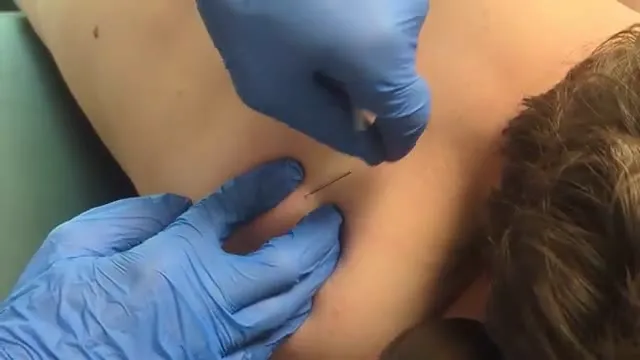
Dry needling works by placing a thin, sterile filament directly into a tight band of muscle, called a trigger point. The needle prompts a small local twitch that helps the muscle release, increases blood flow to the area, and reduces the pain signals coming from it. The word dry means the needle carries no medication.
If you have ever wondered how does dry needling work, you are not alone. It looks almost too simple: one thin needle, placed in a tight muscle, and somehow the ache lets go. Whether you are a runner whose calf will not loosen up or a parent whose upper back is knotted from carrying a toddler all day, the mechanism behind that relief is surprisingly clear once you see what the needle is actually doing. In my practice at Helms Performance in Bethesda, MD, I have watched a single, well-placed filament release a muscle that weeks of stretching could not budge. Here is the plain-English version of why.
How Dry Needling Works on Muscle Tissue
Dry needling works by placing a thin, sterile filament directly into a tight band of muscle to help that muscle release. The word "dry" simply means the needle carries no medication. It is solid and very fine, much thinner than the needle used for a shot or a blood draw. Nothing is injected. The needle itself is the treatment.
When the filament reaches the tense tissue, a few things happen at once. The muscle often gives a quick twitch and then begins to relax. Blood flow to the area improves. The nerves that were keeping the muscle on high alert start to settle. Together, those changes ease tension and let the muscle move more freely. It is a physical effect on real tissue, not a trick of the mind.
A fine needle reaches a tight muscle knot, the muscle twitches and releases, blood flow improves, and the irritated nerves calm down. Less tension, freer movement.
Wondering if dry needling is right for a stubborn ache? Dr. Helms will tell you honestly whether it fits your situation.
Book An AppointmentWhat Happens to the Trigger Point
The target of dry needling is usually a trigger point. A trigger point is a small, tight knot in a muscle that has stayed contracted and refuses to let go. You can often feel one as a tender lump or a ropey band under the skin. These knots do more than ache locally. They can refer pain somewhere else entirely, which is why a knot in your shoulder can send a headache up the back of your skull, or a tight spot in your hip can nag at your knee.
When the needle enters a trigger point, the muscle frequently responds with a brief, involuntary twitch. We call this a local twitch response, and it is a good sign. It tells us the needle found the exact spot that was driving the problem. That twitch seems to interrupt the holding pattern the muscle was stuck in, almost like flipping a switch that lets it finally stand down.
After the twitch, the tissue tends to soften. Fresh blood moves into the area, carrying oxygen and clearing out the irritants that build up in a muscle that has been clenched too long. The result is a muscle that feels looser and a nervous system that is no longer sounding the alarm.
What You Feel During and After
Most people are surprised by how little they feel when the filament goes in. The needle is so thin that the entry itself is often barely noticeable. What you do feel is the twitch, a quick jump or cramp-like sensation that is over almost before you register it, followed by a deep sense of release.
Here is what patients tend to describe:
- A fast twitch or flicker in the muscle as the needle finds the spot
- A deep, achy heaviness for a moment, more pressure than sharp pain
- A loosening once the muscle lets go, often with easier movement right away
- Mild soreness for a day or two afterward, similar to how you feel after a good workout
That post-session soreness is normal and usually fades on its own. Gentle movement, water, and a little warmth tend to help. If you want a fuller picture of the sensation, we cover it in detail in our guide to whether dry needling hurts. If anything ever feels genuinely sharp or electric during treatment, that is worth saying out loud right away. I adjust as I go, and the goal is always relief, never gritting through it.
How Dry Needling Differs from Simply Pushing on a Knot
It is a fair question. If a trigger point is just a tight knot, why not press on it with a thumb, a massage ball, or a foam roller? Pressure can help, and we use hands-on techniques like Active Release Technique all the time. But a needle reaches places that pressure cannot.
A thumb or a roller works from the outside in. It compresses everything above the knot to get to it, which can be uncomfortable and only reaches so deep. A filament goes straight to the trigger point with almost no effect on the tissue around it. That precision is the difference. It can find a knot buried under other muscles, and it can prompt that twitch response that manual pressure usually cannot.
Massage and rolling work from the surface down. A needle reaches the exact knot directly and can trigger the release response that pressure alone often misses.
This is also why dry needling is rarely the whole plan on its own. At Helms Performance, I pair it with hands-on care, movement, and a few targeted exercises so the relief lasts. The needle helps the muscle let go. The rest of the plan addresses why it tightened up in the first place. People often ask how it stacks up against acupuncture, too, and the answer is that they are different tools entirely, which we break down in dry needling vs. acupuncture.
Dr. Paul's Final Thoughts
So, how does dry needling work? A fine needle reaches a tight muscle knot, the muscle twitches and releases, circulation improves, and the overworked nerves calm down. No medication, no mystery. Just a precise way to help a muscle that has forgotten how to relax.
It is not the right answer for every ache, and it is not meant to replace a proper exam. If you are dealing with stubborn muscle tension, a sports injury that stalled, or pain that travels in a way you cannot explain, the best next step is to have someone look at it in person. Whether you are a weekend athlete or simply tired of a knot that will not quit, we are glad to help you figure out what is going on and what will actually move the needle.