Neck Pain Relief · Bethesda, MD

Chiropractic for
Neck Pain
in Bethesda, MD

Whether you've been dealing with chronic tension from long days at a desk, or you woke up this morning unable to turn your head, neck pain has a way of disrupting everything. Dr. Paul Helms provides chiropractic for neck pain at Helms Performance in Bethesda. He combines sports chiropractic, Active Release Technique, and physical therapy to find the source of your pain and help you get back to the activities you love.

One-on-one with Dr. Helms | Sports chiro + physical therapy | Bethesda, MD
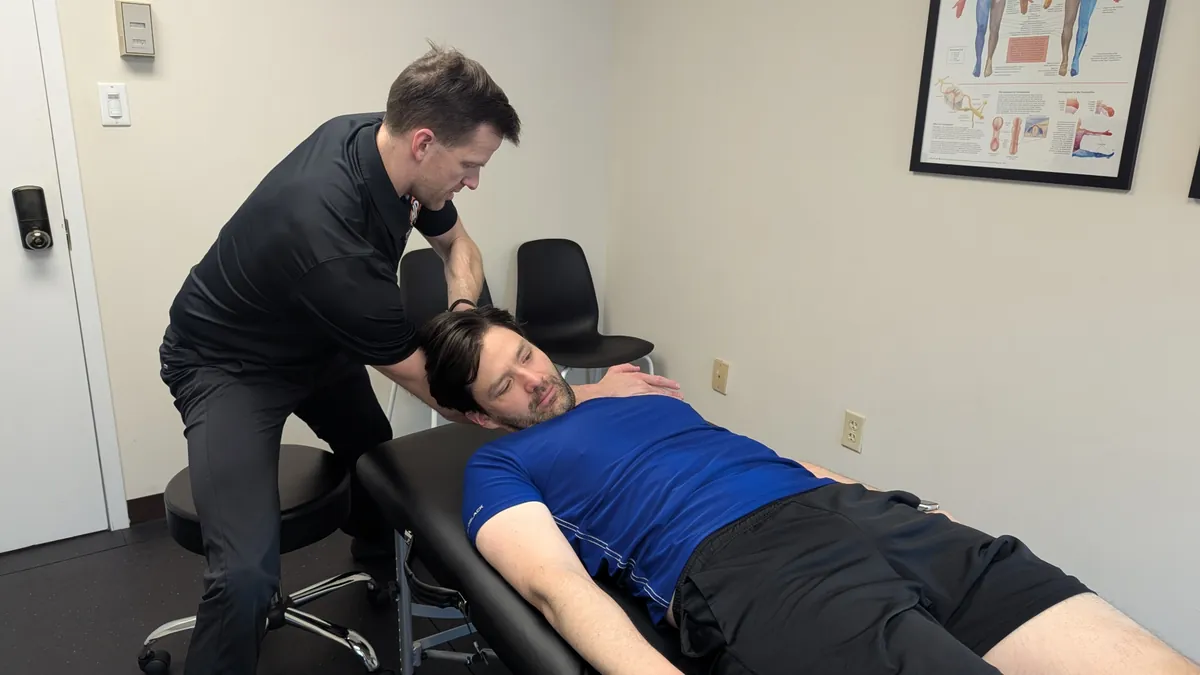
Neck pain treatment at Helms Performance in Bethesda, MD
One-on-one with Dr. Helms every visit
Same-day appointments available
Chiropractic + physical therapy under one roof
Walk from the Bethesda Metro

Relieve pain

Neck pain rarely comes from just one source. Tight muscles, restricted cervical joints, and irritated nerves usually show up together. We address all three with chiropractic care, ART, and hands-on soft tissue work.

Restore movement

Once pain settles, the goal is restoring full cervical range of motion, so you can turn your head, look over your shoulder, and move freely again without bracing.

Rebuild strength

Lasting relief means building the deep neck flexor and postural strength that keeps pain from returning, whether you're sitting at a desk all day or training at a high level.

Understanding Neck Pain

What's Really Causing Your Neck Pain

Neck pain is one of the most common conditions we see at Helms Performance. Whether you sit at a desk for hours, sleep in an awkward position, or carry stress in your upper back and shoulders, the neck is often the first place the body shows it.

In my practice in Bethesda, the most common presentations I see are a combination of restricted cervical joints, overworked muscles, and a nervous system that has been under sustained load for too long. Pain in the neck is rarely just about the neck.

Understanding what is actually driving the pain is the first step toward treating the right thing. The source could be tight muscles, stiff joints, disc pressure, or nerve irritation. Dr. Helms assesses all of these in a single visit before recommending a plan.

1
Muscle Tension And Trigger Points Tight upper trapezius, levator scapulae, and suboccipital muscles restrict movement and refer pain up into the head and down into the shoulder
2
Cervical Joint Restriction Stiff facet joints in the cervical spine limit rotation and side bending, often the root cause of that "locked up" feeling on one side
3
Disc And Nerve Involvement Cervical disc issues or nerve irritation can cause pain, tingling, or weakness that travels into the shoulder, arm, or hand
Neck pain vs. shoulder pain

These two conditions often occur together and are easy to confuse. If your pain is felt at the base of the skull, along the cervical spine, or across the top of the shoulder with head movement, it usually originates in the neck. True shoulder pain tends to be felt deeper in the joint, or with arm lifting. Dr. Helms assesses both in every visit.

Our Approach

How We Treat Neck Pain at Helms Performance

Whether you're managing a fresh flare-up or a pattern you've carried for years, we use a combination of hands-on techniques and targeted movement work to address neck pain at its source. No single tool fits every presentation, which is why having both chiropractic and physical therapy under one roof matters.

Sports chiropractic

Spinal adjustments and cervical joint mobilization that restore movement and reduce pain directly at the restricted joint.

Active Release Technique

A massage and movement-based technique that releases tight muscles, tendons, and nerves contributing to neck pain and tension headaches. ART is especially effective for tech neck and chronic upper trap tightness.

Sports physical therapy

Movement rehab and targeted strengthening that rebuilds cervical stability and corrects the postural patterns that keep pulling the neck back into pain.

Dry needling

Thin filaments placed into trigger points in the neck, upper trap, and suboccipital muscles to release tension, restore blood flow, and quiet overactive pain signals.

Myofascial release

Sustained pressure on fascial restrictions in the neck and upper back, reducing chronic tightness and improving range of motion in the cervical spine.

Fascial stretch therapy

Assisted stretching that improves cervical mobility and releases deeper layers of tension that stretching alone cannot reach.

Manual therapy

Joint and soft tissue techniques tailored to your specific neck pain pattern, including mobilization, cervical traction, and instrument-assisted soft tissue work.

Chiropractic vs. Physical Therapy

Two Disciplines, One Roof: How They Work Together for Neck Pain

Most neck pain involves more than one problem. Chiropractic for neck pain addresses the joints and nervous system; physical therapy addresses movement, strength, and posture. At Helms Performance, both are available in the same visit, so you get the right tool for what you're actually dealing with.

What We're Addressing Sports Chiropractic Sports Physical Therapy
Primary focus Spinal and cervical joint mobility; nervous system function Movement rehabilitation; rebuilding postural strength
Main techniques Spinal adjustments, joint mobilization, Active Release Technique, soft tissue work Exercise therapy, neuromuscular re-education, cervical stabilization, manual therapy
Best for neck pain when Joints feel locked, nerve pain radiates into arm, or the neck is acutely painful and restricted Postural habits keep pulling pain back, or you need strength work to prevent recurrence
Results timeline Pain and range of motion often improve within one to three visits Strength and postural changes build over four to eight weeks
Works best with Physical therapy, dry needling, fascial stretch therapy Chiropractic, ART, myofascial release
At Helms Performance, Dr. Helms draws on both disciplines in every visit, choosing the right combination based on your specific neck pain presentation that day.
Your First Visit

What to Expect From Your First Appointment

Your first appointment at Helms Performance starts with a full assessment of your neck, posture, and movement patterns. Dr. Helms wants to understand what you're dealing with before recommending anything.

  1. Neck And Posture Assessment

    Dr. Helms evaluates your cervical range of motion, joint restriction patterns, and muscle tension to identify exactly what is driving your pain. This shapes everything that follows.

  2. Hands-on Treatment

    Depending on what the assessment reveals, your first visit may include chiropractic adjustments, Active Release Technique, soft tissue work, or a combination of all three.

  3. Movement And Posture Guidance

    You'll leave with specific exercises or postural adjustments to start right away, reducing pain and supporting your recovery between visits.

  4. Your Recovery Plan

    Dr. Helms will give you a clear picture of what is causing your neck pain and a realistic plan with timelines, not an open-ended course of care.

Dr. Paul Helms, Sports Chiropractor in Bethesda, MD
Dr. Paul Helms Sports Chiropractor, Bethesda MD
Your Provider

Dr. Paul Helms

Dr. Helms has worked with patients ranging from desk workers and weekend runners to professional athletes in the NFL and NBA. Neck pain is one of the most common conditions he treats, and one of the most responsive to the right combination of care.

He uses a combination of sports chiropractic and physical therapy to address tight muscles, restricted joints, nerve irritation, and the postural habits that keep pulling the neck back into pain. Every appointment is one-on-one, and every plan is built around your specific situation and goals.

  • Doctor of Chiropractic
  • Licensed in dry needling
  • Sports physical therapy training and application
  • Certified in Active Release Technique and Fascial Stretch Therapy
  • Experience with patients ranging from weekend runners to NFL and NBA athletes
  • Located at 7625 Wisconsin Ave, Suite 219, Bethesda, MD 20814
Learn about Dr. Helms
Common Questions

Neck Pain FAQs

Answers to the questions we hear most often about neck pain, so you know what to expect before you come in.

What causes neck pain?

Common causes include muscle tension from poor posture or prolonged sitting, cervical joint restriction, disc issues, and stress. In my practice at Helms Performance, most neck pain cases involve a combination of tight muscles and restricted cervical joints, often aggravated by hours at a desk or sleeping in an awkward position. A full assessment helps identify exactly what is driving yours, so we can treat the right thing rather than guessing.

How can I relieve neck pain fast?

Gentle range-of-motion exercises, heat for muscle tension, and ice for acute inflammation can help manage symptoms short-term. That said, fast relief usually comes from addressing the underlying cause, whether that is a trigger point, a restricted cervical joint, or a nerve issue. Getting a professional assessment is the fastest path to lasting neck pain relief, not just temporary management.

I woke up with neck pain and can't turn my head. What happened?

This is one of the most common presentations we see. It usually means a cervical joint locked up overnight, often from an awkward sleeping position, a pillow that put the neck at an odd angle, or accumulated muscle tension that finally gave way. The good news: it tends to respond very quickly to chiropractic adjustment and soft tissue work. Most patients see significant improvement within one or two visits.

Can neck pain cause headaches or dizziness?

Yes, to both. Cervicogenic headaches originate from restricted joints or tight muscles in the upper cervical spine and are typically felt at the base of the skull or behind the eyes. Cervicogenic dizziness occurs when upper cervical joint dysfunction affects the position sensors in the neck, giving a sense of unsteadiness. Both respond well to chiropractic care and manual therapy targeting the cervical spine.

How do I sleep with neck pain?

Use a pillow that keeps your neck in a neutral position, aligned with your spine. Side sleepers generally need a thicker pillow; back sleepers need a thinner one. Avoid sleeping on your stomach, which forces the neck into rotation for hours and is one of the most common contributors to morning neck stiffness. If you're waking up consistently with neck pain, the underlying cause is usually worth having a provider evaluate rather than just adjusting your pillow.

Can stress cause neck pain?

Yes. Stress activates the upper trapezius, levator scapulae, and other muscles around the neck and shoulders, the same muscles that form trigger points and restrict cervical movement over time. Patients who carry stress in their shoulders almost always carry it in their neck too. Addressing the muscle tension directly, rather than waiting for it to resolve on its own, is usually the faster path to relief.

Why does my neck pain only hurt on one side?

One-sided neck pain, whether on the left or right, is very common and usually means there is a restricted facet joint, a trigger point, or a muscle imbalance on that side. Left-sided neck pain can sometimes involve the scalene muscles, which also affect breathing patterns and can refer pain into the shoulder and collarbone area. If your pain is clearly on one side of the neck and not the other, chiropractic assessment and targeted soft tissue work on that side is usually effective within a few visits. If you also feel tingling, numbness, or weakness traveling into the arm on the same side, that can indicate nerve involvement and is worth getting evaluated promptly.

Ready to Get Your Neck Moving Again?

Whether you've been dealing with neck pain for years or it came on suddenly this week, we'll help you get back to work, back in the game, and back to the activities you love. Book A Visit with Dr. Helms at Helms Performance in Bethesda, MD.

Book An Appointment

Or call 301-578-5197 to speak with our team