Ankle Pain Relief · Bethesda, MD

Ankle Pain Relief
in Bethesda, MD

Whether you rolled your ankle during a run, developed sudden ankle pain without any injury, or simply woke up with discomfort you cannot explain, Dr. Paul Helms at Helms Performance in Bethesda helps you find the source and move freely again. Sports chiropractic and physical therapy together, for everyone from competitive athletes to anyone whose ankle is making daily life harder than it should be.

One-on-one with Dr. Helms | Sports chiro + physical therapy | Bethesda, MD
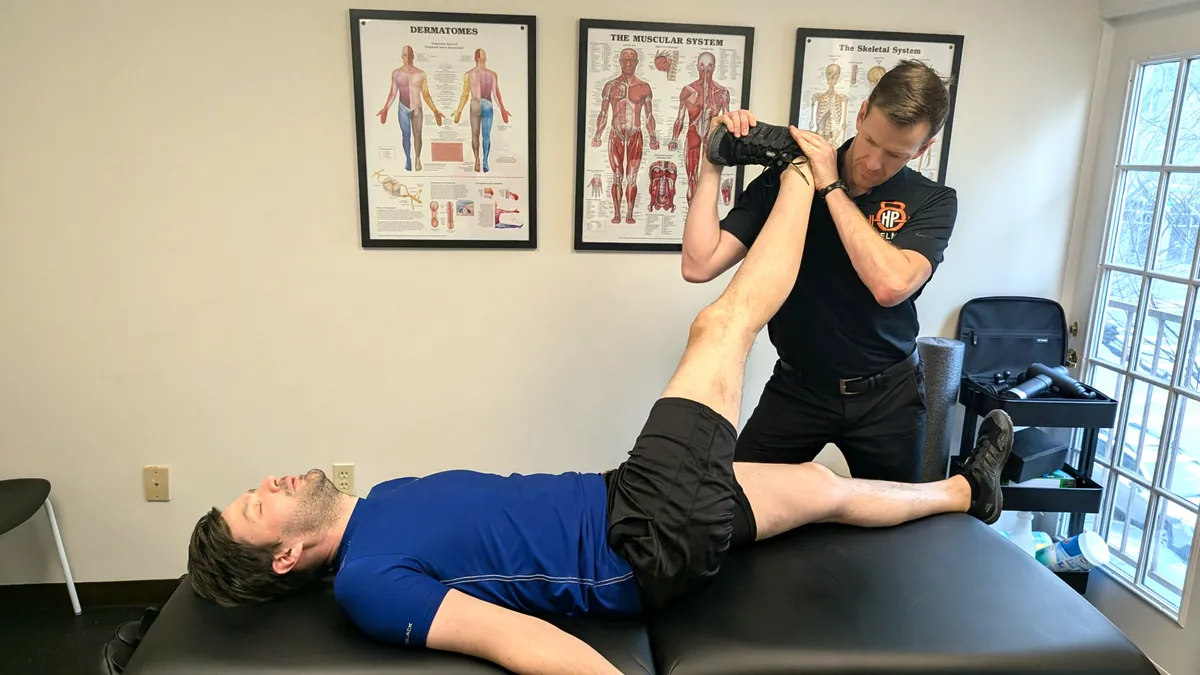
Ankle pain treatment at Helms Performance in Bethesda, MD
One-on-one every visit
Same-day appointments available
Bethesda, MD

Relieve pain

Joint mobilization, Active Release Technique (a hands-on method that releases tight muscles, tendons, and nerves through guided movement), and targeted soft tissue work to reduce pain and inflammation so you can walk, stand, and move comfortably again.

Restore movement

We address the mechanical cause so your ankle moves the way it should, whether that is a tendon problem, a joint restriction, or a movement pattern that needs correcting.

Rebuild strength

Weak peroneals, poor single-leg stability, and limited range of motion all set the stage for re-injury. We build the ankle's support structure back up so it holds.

Understanding Ankle Pain

Where Your Ankle Hurts Tells Us a Lot

In my practice at Helms Performance, the most common ankle presentation I see without a clear injury is tendon irritation, particularly in the Achilles, peroneal, or posterior tibial tendons. Patients are often surprised that no fall or twist was involved. A sudden increase in activity, a change in footwear, or cumulative stress from repetitive movement are the usual culprits behind sudden ankle pain without injury.

Location is the fastest diagnostic shortcut. The reference table below maps where patients feel pain to the most likely structure involved. It is a starting point, not a diagnosis, and several structures share the same small space, so distinguishing them accurately requires a hands-on evaluation.

Whether your pain started after a run, appeared without warning, or has been building quietly for months, please do not rely solely on self-diagnosis. A thorough evaluation is the most reliable path to a plan that addresses the right structure.

Location Likely Structure Common Cause
Inner ankle (medial) Posterior tibial tendon or deltoid ligament Overpronation, overuse, flat feet
Outer ankle (lateral) Peroneal tendons or lateral ligaments Rolling the ankle, chronic instability, overuse
Back of ankle (Achilles) Achilles tendon Running load increase, footwear change, tight calves
Front of ankle (anterior) Extensor tendons or joint capsule Impingement, bone spur, repeated squatting
1
Inner Ankle (medial) Pain Often the posterior tibial tendon or deltoid ligament. Aches with walking and flat-footed loading. Common in overpronators.
2
Outer Ankle (lateral) Pain Commonly the peroneal tendons or lateral ligaments after a sprain. The most frequent ankle injury site overall.
3
Back of Ankle / Achilles Pain above the heel is usually Achilles tendinopathy. Often stiff first thing in the morning and worse after prolonged sitting.
4
Front of Ankle (anterior) Pain A pinching sensation when squatting or flexing the foot upward often points to ankle impingement or extensor tendon irritation.
Ankle pain with swelling vs. without swelling

Both can be significant. Swelling after a twist often means ligament injury. Sudden ankle pain without swelling is more often a tendon problem or joint issue. Either way, location and movement patterns guide us to the right answer quickly.

Who We Help

Ankle Pain Conditions We Treat

Whether you are a runner dealing with Achilles pain after miles on the trail, or someone whose ankle started hurting one morning with no obvious cause, Dr. Helms uses sports chiropractic and physical therapy to address the source of your pain, not just the symptoms.

Ankle sprains

Ankle sprains range from mild ligament stretching to more significant tearing, depending on the force involved. Proper rehabilitation helps restore stability and prevents the cycle of repeat sprains that so many people get stuck in.

Achilles tendinopathy

Achilles tendinopathy causes stiffness and pain at the back of the ankle, just above the heel. It shows up in runners, but also in anyone who has recently picked up activity or switched footwear.

Peroneal tendinopathy

Peroneal tendinopathy causes outer ankle pain along the tendons that run behind the bony bump on the outside of the ankle. It is often mistaken for a lingering sprain that never fully healed.

Posterior tibial tendinopathy

Posterior tibial tendinopathy causes inner ankle pain from the tendon that supports the arch. When it goes untreated, it is one of the more common reasons adults develop a gradual loss of arch height over time.

Ankle impingement

Ankle impingement causes a pinching sensation at the front or back of the ankle during movement, often from bone spurs or scar tissue limiting joint space. It tends to worsen with squatting, deep flexion, and climbing stairs.

Plantar fasciitis-related ankle pain

Plantar fascia tension can refer discomfort into the inner ankle and calf. Tight calves often drive both conditions simultaneously, so treating only one often falls short.

Ankle pain after running

These are overuse injuries that develop when training load, footwear, or movement patterns shift faster than the body can adapt. The result is cumulative stress on tendons, ligaments, and joints that builds until something starts to hurt.

Your First Visit

What to Expect From Your First Appointment

Your first visit is a full evaluation, not just a treatment. Dr. Helms takes the time to understand exactly what is happening before building a plan around your specific goals and activity level.

  1. History and Pain Assessment

    Dr. Helms asks when the pain started, what makes it better or worse, and what activities matter most to you. Understanding your story shapes everything that follows.

  2. Movement and Structural Evaluation

    He assesses ankle range of motion, joint mobility, tendon integrity, and how you move under load. This is how we identify the specific structure causing your pain.

  3. Hands-on Treatment Begins

    Most patients receive treatment during the first visit. Depending on your presentation, this may include joint mobilization, Active Release Technique (a movement-based method for muscles, tendons, and nerves), soft tissue work, or dry needling.

  4. A Clear Plan Going Forward

    You leave knowing what is causing your pain, what we are going to do about it, and realistic timelines. No vague open-ended courses of care.

Dr. Helms' approach to sudden ankle pain without injury
Identify the specific structure Palpation and movement testing to isolate the exact tendon, joint, or ligament involved, not just the region of pain.
Address the tissue directly Active Release Technique, joint mobilization, or dry needling applied to the specific structure driving your symptoms.
Load progressively Guided exercises that restore the tendon or joint's ability to handle the demands of your daily life or training without re-irritating it.
Dr. Paul Helms, sports chiropractor and physical therapist at Helms Performance in Bethesda, MD
Dr. Paul Helms Sports Chiropractor, Bethesda MD
Your Provider

Dr. Paul Helms

Dr. Helms has worked with patients ranging from weekend runners and desk workers to professional athletes in the NFL and NBA. His practice is built to welcome everyone. Whether your ankle pain came on after a hard workout or appeared on an ordinary Tuesday morning with no clear reason, you are in the right place.

He combines sports chiropractic and physical therapy to treat ankle pain at its source. Every appointment is one-on-one, and every treatment plan is built around your specific goals and activity level, not a one-size-fits-all protocol.

  • Doctor of Chiropractic
  • Licensed in dry needling
  • Sports physical therapy training and application
  • Certified in Active Release Technique and Fascial Stretch Therapy
  • Experience with patients ranging from weekend runners to NFL and NBA athletes
  • Located at 7625 Wisconsin Ave, Suite 219, Bethesda, MD 20814
Learn About Dr. Helms
Common Questions

Ankle Pain FAQs

What causes sudden ankle pain without injury?

In my practice at Helms Performance, sudden ankle pain without a fall or twist is most often caused by tendon irritation, particularly in the Achilles, peroneal, or posterior tibial tendons. Overuse, a sudden increase in activity, or a change in footwear are the most common triggers. It can also result from a stress reaction in the bone or joint impingement. Because several structures run close together around the ankle, a professional evaluation is the most reliable way to identify the source and build a plan that addresses the right structure, not just the region of pain.

Why does my ankle hurt when I walk?

Ankle pain that is worse when walking usually points to a tendon, ligament, or joint problem being loaded with each step. Common causes include posterior tibial tendinopathy (inner ankle), peroneal tendinopathy (outer ankle), Achilles tendinopathy (back of ankle), and joint impingement (front of ankle). The location of your pain and which movements make it worse help us identify the source quickly and confirm it with a movement assessment.

Can plantar fasciitis cause ankle pain?

Yes. The plantar fascia connects to the heel and when inflamed, tension can refer discomfort into the inner ankle and lower leg. Tight calf muscles often contribute to both conditions at the same time. If heel pain extends toward your ankle, both structures likely need to be addressed together for lasting relief. Active Release Technique is one approach we use to address both the plantar fascia and the ankle simultaneously.

How long does ankle pain take to heal?

It depends on the cause. A mild ankle sprain may improve in one to two weeks with the right care. Tendon problems like Achilles or peroneal tendinopathy can take four to twelve weeks, especially if the tendon has been irritated for a while before treatment begins. With hands-on care and a clear plan, most patients at Helms Performance see meaningful improvement within the first few visits.

When should I see a provider for ankle pain?

See a provider promptly if you cannot bear weight, if there is significant swelling or bruising, or if pain appeared suddenly without an obvious cause. Ankle pain that does not improve after one to two weeks of rest also warrants an evaluation. Earlier treatment generally produces better outcomes and helps you avoid the movement compensations that create new problems in the knee, hip, or lower back over time.

Can flat feet cause ankle pain?

Yes. Flat feet place extra stress on the posterior tibial tendon along the inner ankle and can also affect the Achilles and plantar fascia. Many patients find that addressing foot mechanics and the supporting muscles at Helms Performance in Bethesda, MD relieves ankle pain that stretching and rest alone could not touch. Gait analysis and targeted soft tissue work are often part of the solution.

Ready to Get Back on Your Feet?

Whether you are dealing with a stubborn sprain, tendon pain that will not quit, or sudden ankle pain that came out of nowhere, we will help you get back to the activities you love. Book a visit with Dr. Helms in Bethesda, MD.

Book An Appointment

Or call 301-578-5197 to speak with our team