Sciatica Chiropractor · Bethesda, MD

Sciatica Chiropractor
in Bethesda, MD

That shooting pain from your lower back down through your leg can make sitting through a long workday, sleeping through the night, or getting back to a morning run feel impossible. Whether you're a desk worker whose pain flares on the commute or an active person who just wants to move comfortably again, Dr. Paul Helms combines chiropractic adjustments, Active Release Technique, and physical therapy to find the source of your sciatica and help you get back to the activities you love.

One-on-one with Dr. Helms Chiropractic + physical therapy Same-day appointments available
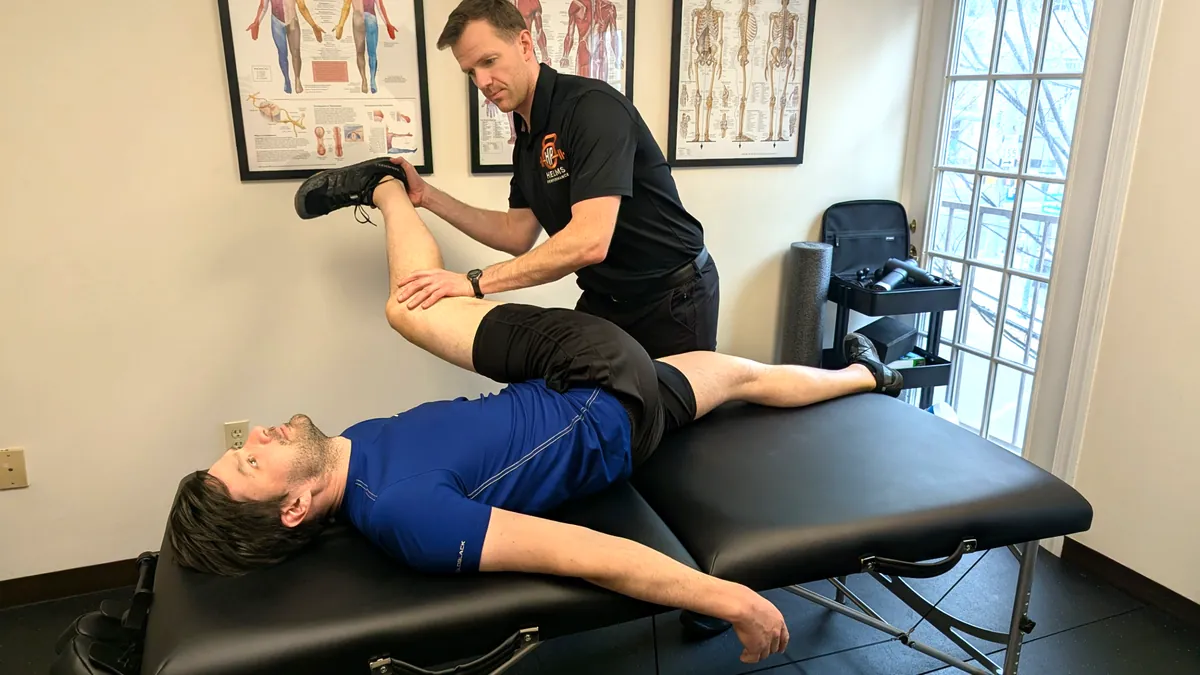
Sciatica pain treatment at Helms Performance in Bethesda, MD

Relieve pain

We find the source of your nerve compression (whether it is from a disc, a tight muscle, or the joint) and treat it directly rather than managing symptoms.

Restore movement

Sciatica limits more than just comfort. It limits how you sit, sleep, and move through your day. We help you get back to all of it.

Rebuild strength

Physical therapy restores the strength and movement patterns that take pressure off the sciatic nerve and reduce the chance of sciatica returning.

What Is Sciatica?

Understanding Your Sciatica Pain

Sciatica is not a diagnosis by itself. It is a symptom. It describes pain that travels along the sciatic nerve, which runs from your lower back through your hips and buttocks, down each leg. When this nerve is compressed or irritated, the result can be a shooting, burning, or electric pain that follows that same path, sometimes all the way to the foot.

The most common causes are a herniated disc pressing on a nerve root, a tight piriformis muscle in the hip, spinal stenosis narrowing the canal where the nerve passes, or inflammation in the surrounding soft tissue. Because these causes are different, the right treatment depends on identifying which one is actually driving your pain.

That distinction matters more than it might seem. Most people with sciatica try rest, stretching, or over-the-counter pain relief, and find that the pain keeps coming back. Treating the source, rather than the symptom, is what produces lasting relief.

Find the Source We assess where the sciatic nerve is being compressed (whether it originates from a disc, a tight hip muscle, or the spinal joint).
Release What Is Pressing Manual therapy, Active Release Technique, and dry needling release the tissue that is putting pressure on the nerve.
Restore Stability Physical therapy rebuilds the strength and movement patterns that reduce nerve stress and help keep sciatica from returning.
Sciatica vs. General Back Pain

Sciatica has a specific nerve cause. Most generic back pain treatments address muscle soreness without reaching the compressed nerve. Getting the right diagnosis first changes what the treatment looks like, and how quickly you recover.

Who We Help

Sciatica Doesn't Discriminate

Whether you're training for a marathon or trying to get through a grocery run without wincing, sciatica is limiting your life. Dr. Helms works with patients of all ages and activity levels. Everyone is welcome.

Desk Workers

Long hours of sitting are one of the most common triggers for sciatic nerve pain. If your pain flares on the commute or gets worse through the afternoon, we can help.

Runners & Active People

Sciatica can sideline even the most consistent athletes. Whether you're training for a race or just want to stay active, we help you get back to moving the way you want to move.

Older Adults & Retirees

Sciatica from spinal stenosis or degenerative changes is very common, and very treatable. You do not have to accept it as something you just live with.

Postpartum Recovery

Pregnancy-related changes to the pelvis and lower back can compress the sciatic nerve long after delivery. We work with postpartum patients to relieve that pain and restore comfortable movement.

Our Approach

How We Treat Sciatica at Helms Performance

Whether your pain started suddenly or has been building for months, we work with you to find what is causing the nerve compression and address it directly. Our approach combines two disciplines under one roof, so your treatment plan can include exactly what your situation calls for.

Chiropractic Adjustments

Spinal and joint adjustments reduce pressure on the sciatic nerve by restoring proper alignment in the lower back and pelvis, where nerve compression most often begins.

Learn more →

Active Release Technique

Active Release Technique: a hands-on, movement-based therapy that releases tight muscles, tendons, and fascia (especially in the hip and piriformis region) that may be compressing the sciatic nerve.

Learn more →

Sports Physical Therapy

Sports physical therapy restores the movement patterns and strength that take sustained pressure off the nerve and significantly reduce the chance of sciatica returning over time.

Learn more →

Dry Needling

Dry needling reaches deep into muscle tissue to release trigger points in the glutes, hip rotators, and lower back that can press directly on the sciatic nerve and keep symptoms active.

Learn more →

Myofascial Release

Myofascial release: a sustained gentle-pressure technique that loosens connective tissue restrictions contributing to nerve compression and the radiating pain that follows.

Learn more →

Fascial Stretch Therapy

Fascial stretch therapy addresses the connective tissue running alongside the sciatic nerve pathway, restoring length and reducing the tension that keeps symptoms active.

Learn more →
Treatment Comparison

Can a Chiropractor Help with Sciatica?

Yes, and research supports it. Chiropractic care is one of the most effective treatments for sciatica when the cause is a herniated disc or joint dysfunction. Here is how the most common treatment approaches compare, and what each one can realistically do for you.

Treatment How It Helps Sciatica Best For Limitation
Chiropractic adjustments
Best for structural causes
Restores spinal alignment and reduces disc or joint pressure on the nerve root Herniated disc, facet joint dysfunction, lumbar misalignment Most effective when combined with soft tissue care
Dry Needling
Best for trigger point-driven sciatica
Releases deep trigger points in the glutes, hip rotators, and lower back that compress or irritate the sciatic nerve Piriformis syndrome, muscle tension-driven nerve compression, chronic pain Most effective when combined with structural and movement-based care
Physical therapy
Strong for long-term recovery
Rebuilds the strength and movement patterns that reduce nerve stress over time All sciatica causes; prevention of recurrence Slower to relieve acute pain on its own
Rest alone
Limited
Reduces short-term inflammation Mild, acute cases with temporary muscle tension Does not resolve structural causes; sciatica often returns
Anti-inflammatory medication
Symptom management only
Temporarily reduces nerve inflammation and masks pain signals Managing acute flare-ups in the short term No structural correction; stops working when stopped

At Helms Performance, we combine chiropractic, Active Release Technique, and physical therapy in a single plan, so we can address both the structural cause and the soft tissue tension at the same time. That combination tends to produce faster, more lasting results than any one approach on its own.

Your First Visit

What to Expect From Your First Sciatica Appointment

Sciatica can have more than one source, and the right treatment depends on which one is driving your pain. Your first visit with Dr. Helms is about understanding your specific situation before starting treatment.

  1. A Thorough Assessment

    Dr. Helms reviews your history, movement patterns, and where the pain radiates to pinpoint the source of your nerve compression.

  2. Hands-On Treatment

    Based on what the assessment reveals, your first session typically includes chiropractic care, soft tissue work, or a combination of both.

  3. A Clear Explanation

    You leave understanding exactly what is causing your sciatica and what is keeping it from resolving on its own.

  4. A Realistic Recovery Plan

    Dr. Helms gives you a plan with clear timelines. No open-ended schedule, no ambiguity about next steps.

Dr. Paul Helms, sciatica chiropractor and physical therapist at Helms Performance in Bethesda, MD
Dr. Paul Helms Sciatica Chiropractor, Bethesda, MD
Your Provider

Dr. Paul Helms

Dr. Helms has worked with patients ranging from desk workers and retirees to professional athletes in the NFL and NBA. His practice is built to welcome everyone. If sciatica is limiting your life, you are in the right place.

He combines chiropractic care, Active Release Technique, and physical therapy to find the root cause of your nerve pain, not just manage its symptoms. Every appointment is one-on-one, and every treatment plan is built around your specific goals and activity level.

  • Doctor of Chiropractic
  • Licensed in dry needling
  • Sports physical therapy training and application
  • Certified in Active Release Technique and Fascial Stretch Therapy
  • Experience with patients ranging from weekend runners to NFL and NBA athletes
  • Located at 7625 Wisconsin Ave, Suite 219, Bethesda, MD 20814
Learn About Dr. Helms
Common Questions

Sciatica FAQs

Answers to the questions we hear most often, so you know what to expect before you come in.

Can a chiropractor help with sciatica?

Yes. Research supports chiropractic care as an effective treatment for sciatica, particularly when the cause is a herniated disc or joint dysfunction in the lumbar spine or pelvis. Spinal adjustments reduce pressure on the sciatic nerve by restoring proper alignment and reducing inflammation around the nerve root. At Helms Performance, we combine chiropractic with Active Release Technique and physical therapy, which allows us to address both the structural cause and the soft tissue tension that keeps the nerve irritated. The combination tends to produce faster, more lasting results than any single approach on its own.

What is sciatica?

Sciatica describes pain that travels along the sciatic nerve, from the lower back through the hip and down the leg. The sciatic nerve is the largest nerve in the body, running from the lumbar spine through the buttock and into the leg. When it is compressed or irritated (whether by a disc, a tight muscle, or an inflamed joint) it produces that distinctive shooting or burning pain. Sciatica is a symptom, not a diagnosis, which is why identifying the specific cause is the first step toward treating it effectively.

What does sciatica feel like?

Most people describe it as a sharp, shooting, or electric pain that starts in the lower back or buttock and travels down one leg. It can also feel like burning, tingling, or numbness, and in some cases a combination of all of these. The pain often feels worse when sitting and better when moving. Some people have constant pain; others have pain that comes and goes depending on position or activity. If the nerve compression is significant, you may also notice weakness in the leg or foot on the affected side.

How many chiropractic visits does it take to treat sciatica?

Most patients notice meaningful improvement within 2 to 4 visits. A full treatment plan typically spans 6 to 12 weeks depending on the underlying cause. Acute cases from muscle tension may resolve faster, while sciatica from a herniated disc or spinal stenosis may require a longer course. Dr. Helms will give you a clear plan and realistic timeline at your first appointment, not an open-ended schedule with no endpoint.

How long does sciatica last?

It depends on the cause. Acute sciatica from a muscle strain or minor disc irritation often improves within a few weeks with the right treatment. Sciatica from a herniated disc or significant nerve compression typically takes 6 to 12 weeks with consistent care. Sciatica that is left untreated or managed only with rest tends to take the longest to resolve, because the underlying cause continues to press on the nerve. Most patients at Helms Performance notice meaningful improvement within the first 2 to 4 visits.

Does sciatica go away on its own?

Sometimes, but not always. Mild cases caused by temporary muscle tightness or minor inflammation may ease on their own within a few weeks. But sciatica caused by a herniated disc, piriformis syndrome, or spinal stenosis rarely resolves without addressing the underlying cause. Even when symptoms quiet down on their own, sciatica often returns if the movement patterns and tissue restrictions that caused it are not corrected. Treating the source, not just waiting out the pain, tends to produce more complete and lasting relief.

How do I sleep with sciatica?

The position that tends to work best is lying on your side with a pillow between your knees. This keeps the pelvis neutral and reduces the rotation that can compress the sciatic nerve. If you sleep on your back, a pillow under your knees can help by taking pressure off the lumbar discs. Sleeping on your stomach is generally the most aggravating position with sciatica, as it increases the arch in the lower back. While positioning helps in the short term, if sciatica is regularly waking you up at night, that is a sign the nerve compression needs to be addressed directly rather than managed around.

Ready to Get Out of Pain?

Whether your sciatica started suddenly or has been building for a while, you do not have to live with it. We will help you get back to work, back in the game, and back to the activities you love.

Book An Appointment

Or call 301-578-5197 to speak with our team