TMJ Pain Relief
in Bethesda, MD
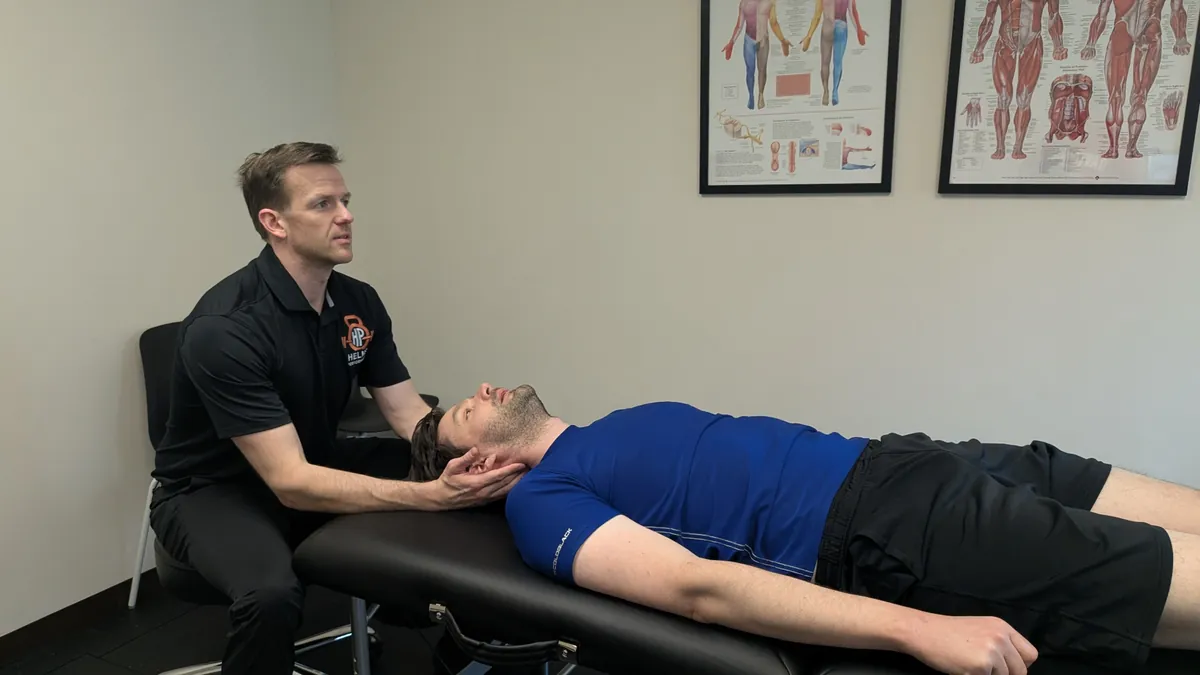
Your jaw clicks when you eat, your ears ache for no clear reason, or you wake up with a stiff neck and a headache that follows you through the day. These are consistent patterns of TMJ dysfunction, a mechanical problem with the temporomandibular joint and surrounding jaw muscles that a standard hearing test, dental x-ray, or ENT exam is not designed to find. At Helms Performance in Bethesda, Dr. Paul Helms evaluates the jaw joint, the muscles that control it, and your cervical spine in the same visit. That integrated approach reflects how these structures actually work together.
Relieve pain
We find the source of your TMJ pain and address the joint mechanics and muscle tension driving it.
Restore movement
Restricted jaw movement and limited mouth opening respond well to hands-on chiropractic care.
Rebuild strength
Targeted exercises reinforce healthy jaw mechanics so the pain stays away long after treatment ends.
Understanding TMJ Dysfunction and Where the Pain Comes From
The temporomandibular joints are the two joints that connect your lower jaw to your skull, one on each side of your face just in front of your ears. When one or both joints are irritated, restricted, or not tracking smoothly, the discomfort rarely stays in one place.
TMJ dysfunction can cause jaw pain and clicking, but it also refers pain into your ears, teeth, neck, and temples, making it one of the most commonly misdiagnosed conditions patients bring to a provider. Many people spend months at a dentist or ENT before learning that the jaw joint is behind the problem. Some patients also notice dizziness alongside jaw and upper neck tension. Our vertigo physical therapy page explains how we treat neck-related dizziness.
At Helms Performance, Dr. Helms assesses the joint mechanics, the surrounding jaw muscles (including the masseter, pterygoids, and suboccipital muscles at the base of the skull), and the way those muscles connect into the cervical spine. Most TMJ patients also have upper cervical restriction contributing to their symptoms, and addressing both together produces better results than treating the jaw in isolation. Treatment combines chiropractic care with Active Release Technique: a massage and movement-based technique that treats problems with muscles, tendons, ligaments, fascia, and nerves.
Dr. Helms evaluates jaw movement, muscle tension, and cervical spine alignment in the same visit, since they are closely connected in most TMJ cases.
Gentle chiropractic adjustment of the jaw and upper cervical spine restores normal range of motion and reduces pain signals from the joint.
Active Release Technique works on the masseter, pterygoid, and suboccipital muscles that are commonly overloaded in TMJ cases.
You'll leave with specific jaw and neck exercises to support your progress between visits and help prevent symptoms from returning.
| Approach | Joint restriction | Muscle tension | Cervical alignment |
|---|---|---|---|
| Mouth guard (dentist) | |||
| Anti-inflammatory medication | |||
| Chiropractic + ART (Dr. Helms) |
A mouth guard reduces grinding but does not address why the joint is restricted or why the muscles are overworking. Chiropractic care and soft tissue treatment work on the source of the restriction.
TMJ Symptoms We Commonly Treat
TMJ dysfunction shows up in more places than most people expect. It affects runners dealing with jaw tension from clenching, desk workers grinding their teeth from stress, and people who have had unexplained ear pain for months with no clear diagnosis from a doctor.
Jaw Pain and Clicking
That familiar pop or click when you open wide is a sign the joint is not tracking smoothly. We help restore normal movement so eating, speaking, and yawning feel comfortable again.
TMJ Ear Pain
Pain or fullness inside the ear that your doctor cannot explain is often coming from the TMJ. The joint sits directly in front of the ear canal, and inflammation there closely mimics an ear infection.
TMJ Headaches
Tension headaches that begin at the jaw, temples, or base of the skull are a common pattern in TMJ dysfunction. Releasing the jaw muscles and restoring joint mechanics often reduces headache frequency significantly.
TMJ and Neck Pain
The muscles that control your jaw connect directly into your upper cervical spine. When the joint is restricted, the tension ripples into your neck and shoulders, and often stays there until the jaw is addressed.
TMJ Tooth Pain
A tender, aching jaw can feel like a toothache, especially near the back molars. If your dentist has cleared your teeth, the jaw joint is often the next place to look.
Morning Jaw Stiffness
Waking up with a locked or stiff jaw is a sign your muscles are overworking overnight, often from clenching or grinding. We address both the joint mechanics and the muscle tension driving it.
TMJ-Related Eye Pain
Referred pain from the TMJ can radiate toward the eye socket or temple. It is less common but well documented, and tends to resolve when the joint itself is treated.
TMJ from Whiplash or Injury
A car accident, sports collision, or any impact to the jaw or neck can disrupt TMJ mechanics. We frequently see TMJ symptoms emerge weeks after an injury that seemed to affect only the neck.
What to Expect From Your First Appointment
Most people are surprised by how much can be covered in a first visit. Here is what a typical TMJ appointment at Helms Performance looks like.
-
Intake and history
We ask about your jaw pain, when it started, where you feel it, and what makes it better or worse. Your full health history matters here, including dental work, neck injuries, or ongoing stress patterns.
-
Joint and muscle assessment
Dr. Helms evaluates the movement of your jaw joint, the tension in the surrounding muscles, and the alignment of your cervical spine. All three are closely connected in most TMJ cases.
-
Hands-on treatment
Most first visits include treatment. Depending on what Dr. Helms finds, this may include gentle chiropractic adjustment of the jaw or neck, Active Release Technique on the jaw muscles, or a combination of both.
-
Home care guidance
You'll leave with specific exercises and stretches to support your recovery between visits and help maintain the progress you make in the office.
The practical details
- How long
- One hour, one-on-one with Dr. Helms.
- What it costs
- $165, a flat fee for the visit.
- Insurance
- We do not accept insurance directly. You can pay with an HSA or FSA card, and we will give you a superbill, an itemized receipt you can submit to your insurer for reimbursement.

Dr. Paul Helms
Dr. Helms founded Helms Performance to offer something most practices don't: sports chiropractic and sports physical therapy under one roof. These are two distinct disciplines. Chiropractic addresses the spine, joints, and nervous system. Physical therapy focuses on movement rehabilitation and functional restoration. Together, they let Dr. Helms treat the full picture of why patients are in pain, not just one piece of it.
He holds advanced certification in Active Release Technique and has worked with patients ranging from weekend runners and desk workers to professional athletes in the NFL and NBA. He works one-on-one with every patient, every visit, in Bethesda, MD.
For TMJ patients specifically, Dr. Helms brings experience treating the jaw joint, upper cervical spine, and surrounding soft tissue as a connected system, which is often the key to resolving symptoms that haven't responded to dental treatment alone.
- Doctor of Chiropractic
- Licensed in dry needling
- Sports physical therapy training and application
- Certified in Active Release Technique and Fascial Stretch Therapy
- Experience with patients ranging from weekend runners to NFL and NBA athletes
- Located at 7625 Wisconsin Ave, Suite 219, Bethesda, MD 20814
TMJ Pain FAQs
Can TMJ cause ear pain?
Yes, and this is one of the most common reasons patients arrive at Helms Performance with months of unexplained ear symptoms. The temporomandibular joint sits directly in front of the ear canal, and when the joint is inflamed or the surrounding muscles are tight, the pain travels into the ear. It can feel like pressure, fullness, or a dull ache, and it is often mistaken for an ear infection. When your ear exams come back normal, the jaw is often the next place to look.
How do I relieve TMJ pain?
The most effective approach combines addressing the joint mechanics with releasing the tight muscles around it. At home, applying moist heat to the jaw muscles, avoiding hard or chewy foods, and doing gentle jaw stretches can help reduce symptoms day to day. But if your symptoms are persistent or keep returning, hands-on treatment tends to work faster and more durably than home care alone. Dr. Helms uses chiropractic adjustment and Active Release Technique to address the restriction at the source rather than manage it temporarily.
What causes TMJ pain?
TMJ dysfunction can develop from several sources: teeth grinding or clenching (often during sleep), a jaw injury or whiplash, poor head and neck posture that shifts load into the jaw muscles, arthritis in the joint, or chronic muscle tension from stress. Many patients have more than one contributing factor, which is why treatment works best when it addresses the full picture rather than a single cause.
Can TMJ cause neck pain?
Yes. The muscles that control the jaw connect directly into the upper cervical spine. When these muscles are chronically tight or the joint is restricted, the tension ripples into the neck. Many patients who have been treating persistent neck pain for months discover that addressing their jaw mechanics is what finally helps the neck relax.
Can TMJ cause tooth pain?
TMJ-related pain can refer into the teeth, particularly the back molars, and feel exactly like a toothache. If your dentist has checked your teeth and found nothing wrong, it is worth having your jaw joint evaluated. The referred pain pattern from the TMJ is well documented and often resolves when the joint itself is treated rather than the tooth.
How long does TMJ pain last?
It depends on what's driving it and how long it has been present. Some patients feel significant relief after two or three visits. Others with longer-standing restrictions take more time to work through. Patients who combine in-office treatment with consistent home exercises tend to see the fastest improvement. Most people do not need to manage TMJ symptoms indefinitely, and many find they can reduce or stop treatment once the underlying joint restriction and muscle imbalance are resolved.
Ready to Get Out of Pain?
If jaw pain, ear aches, or TMJ headaches have been following you around without a clear answer, we can help. Book a visit at Helms Performance in Bethesda, and we'll help you get back to the activities you love.
Book An AppointmentOr call 301-578-5197 to speak with our team