Hip Pain Relief
in Bethesda, MD
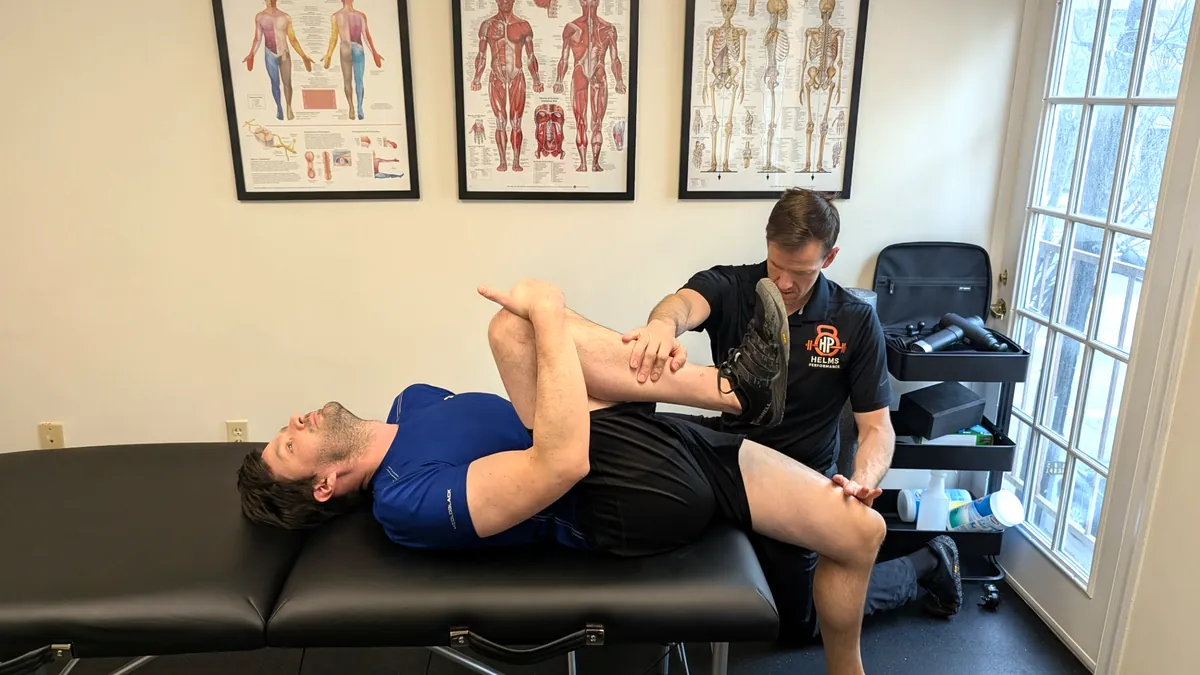
Whether you feel it walking to your car, getting out of bed in the morning, or lying on your side at night: hip pain has several possible sources, and the right treatment depends on identifying the correct one. At Helms Performance, the most common mistake we see is treating the hip when the pain is actually coming from the lumbar spine or sciatic nerve. Dr. Paul Helms begins with a thorough physical assessment to determine whether your pain is coming from the hip joint, the hip flexors, the bursa, or referred pain from the lower back. He does this before recommending any treatment.
Relieve pain
We identify the source of your hip pain, whether it is a tight hip flexor, a joint problem, or referred pain from the lower back, and use targeted treatment to reduce it.
Restore movement
Hip pain changes the way you walk, sit, and carry yourself. Manual therapy and targeted rehab work to restore your full range of motion and natural movement patterns.
Rebuild strength
Weak glutes and hip stabilizers are often at the root of chronic hip pain. We rebuild that foundation so your body has the support it needs to stay pain-free long term.
Why Hip Pain Is Hard to Diagnose on Your Own
Hip pain is one of the most common reasons patients come to Helms Performance, and one of the most commonly misunderstood. In many cases, what feels like a hip problem is not actually coming from the hip joint itself. The pain may originate from tight hip flexors, an inflamed bursa, the piriformis muscle compressing the sciatic nerve, or the lumbar spine referring pain into the hip and groin area.
This matters because the right treatment depends entirely on the actual source. Rest, ice, and stretching may help one type of hip pain and do nothing for another. Dr. Helms uses a careful physical assessment to identify exactly where the problem is coming from before recommending any treatment.
At Helms Performance, we offer both sports chiropractic and sports physical therapy under one roof. That means we can address joint-level problems and soft tissue problems together, in the same visit, with a plan tailored to how you move and what you want to get back to.
Hip joint pain is usually felt deep in the groin and worsens with rotation or bearing weight. Hip flexor pain is felt at the front of the hip and upper thigh, worsens when lifting the knee or rising from a chair. The distinction changes the entire treatment approach.
Types of Hip Pain We Treat
Whether you are a runner dealing with a hip flexor strain, someone who wakes up stiff and can barely get out of bed, or an older adult whose hip aches after a walk around the neighborhood, we can help you figure out what is going on and get you back to feeling like yourself.
Hip flexor pain
Tightness and pain at the front of the hip and upper thigh. Common in runners, cyclists, and anyone who spends long hours at a desk. Often caused by tight iliopsoas or rectus femoris muscles.
Hip bursitis
Inflammation of the fluid-filled bursa sac on the outer hip, causing sharp or burning pain along the side of the hip that worsens with walking or lying on that side.
Hip joint pain and arthritis
Deep aching in the groin or front of the hip, often worse on stairs or after sitting. Dr. Helms uses chiropractic and physical therapy to reduce joint stress and improve mobility without surgery.
Hip pain when walking
Pain that appears or worsens with each step may point to bursitis, hip flexor tightness, or a structural problem in the joint. Gait analysis helps pinpoint what is causing the load pattern.
Sciatica-related hip pain
When the sciatic nerve is compressed by a tight piriformis or lumbar disc issue, pain often radiates from the lower back through the hip and down the leg. This is treated at the source, not just the hip.
Lower back and hip pain
The lumbar spine and the hip joint share movement patterns and are closely connected. Pain in both areas at once is common and often has a single root cause that responds well to combined chiropractic and PT care.
Labral tears
A tear in the cartilage ring around the hip socket causes clicking, locking, or a deep groin ache. Physical therapy can significantly reduce symptoms, especially when caught before they become severe.
Hip pain when sitting or sleeping
Pain that flares up while seated or at night often points to bursitis, hip flexor tightness, or nerve involvement. Addressing the underlying cause provides lasting relief, not just position management.
Which Type of Hip Pain Do You Have?
Hip pain has several distinct sources, and each one responds to a different treatment approach. This table covers the most common patterns we see at Helms Performance, along with what distinguishes them and what we focus on in treatment.
| Pain Type | Where You Feel It | What Makes It Worse | Common In | Treatment Focus |
|---|---|---|---|---|
| Hip Flexor Pain | Front of hip, upper thigh, sometimes groin | Sitting for long periods, running, climbing stairs, rising from a chair | Runners, cyclists, desk workers | Soft tissue release, Active Release Technique, targeted mobility work |
| Hip Bursitis | Outer side of hip (greater trochanter area) | Walking, lying on that side, climbing stairs | Active adults; more common in women | Bursa offloading, soft tissue work, activity modification |
| Hip Joint Arthritis | Deep in groin, front of hip | Stairs, prolonged sitting, rotation, bearing weight | Adults 50+, high-load athletes with wear history | Joint mobilization, physical therapy, movement retraining |
| Sciatica-Related Hip Pain | Hip, buttock, radiates down the leg | Sitting, first steps in morning, certain sleeping positions | Mixed ages, especially desk workers and those with low back history | Lumbar spine assessment, piriformis release, nerve decompression |
| Lower Back Referral | Hip, buttock, sometimes groin (without true radiating leg pain) | Twisting, forward bending, prolonged standing | Desk workers, adults with history of back problems | Lumbar chiropractic care, hip mobility work, movement correction |
| Labral Tear | Deep groin ache, clicking or catching sensation in hip | Deep hip flexion, pivoting, prolonged sitting | Athletes, active adults, younger patients | Physical therapy–focused hip stabilization and load reduction |
Not sure which applies to you? A physical assessment is the fastest way to get an accurate answer. Most patients receive treatment at their first visit. Book an appointment at Helms Performance.
What to Expect From Your First Appointment
Your first appointment is a thorough conversation and assessment before anything else. Dr. Helms takes the time to understand your specific pain pattern and goals before recommending any treatment.
-
History And Pain Pattern Review
Dr. Helms asks about when your hip pain started, what makes it better or worse, and what activities it is keeping you from. Whether you are trying to get back to running, keep up with grandkids, or simply walk without discomfort. Those details matter for finding the right source.
-
Physical Assessment
A hands-on evaluation of your hip joint, surrounding muscles, lower back, and movement patterns. This helps distinguish hip joint problems from hip flexor issues from referred pain, which is what determines the correct treatment.
-
First Treatment Session
Most patients receive treatment at their first visit. Depending on your assessment, this may include chiropractic adjustment, soft tissue work, Active Release Technique, or targeted exercises.
-
A Clear Plan Going Forward
Dr. Helms explains what he found and what he recommends. You will leave with a realistic picture of how long recovery typically takes and what to expect at each stage.
The practical details
- How long
- One hour, one-on-one with Dr. Helms.
- What it costs
- $165, a flat fee for the visit.
- Insurance
- We do not accept insurance directly. You can pay with an HSA or FSA card, and we will give you a superbill, an itemized receipt you can submit to your insurer for reimbursement.

Dr. Paul Helms
Dr. Helms has worked with patients ranging from weekend runners and desk workers to professional athletes in the NFL and NBA. His practice is built to welcome everyone. If hip pain is limiting your life, whether you are training for a race or just trying to walk comfortably, you are in the right place.
He combines sports chiropractic and physical therapy to find the root cause of your pain, not just manage its symptoms. Every appointment is one-on-one, and every treatment plan is built around your specific goals and activity level.
- Doctor of Chiropractic
- Licensed in dry needling
- Sports physical therapy training and application
- Certified in Active Release Technique and Fascial Stretch Therapy
- Experience with patients ranging from weekend runners to NFL and NBA athletes
- Located at 7625 Wisconsin Ave, Suite 219, Bethesda, MD 20814
Hip Pain FAQs
Answers to the questions we hear most often about hip pain, its causes, and how we treat it.
What causes hip pain when walking?
Hip pain that appears or worsens with walking usually points to one of three sources. Hip bursitis inflames the fluid-filled sac on the outer hip, causing pain that intensifies with each step. Hip flexor tightness creates a pulling or aching sensation at the front of the hip as the leg swings forward. Hip joint arthritis causes a deep grind or ache in the groin that worsens under load. Less commonly, the pain comes from the lower back or sciatic nerve referring into the hip. A physical assessment is the fastest way to identify which one is causing your pain, since each requires a different approach.
Where is hip flexor pain felt?
Hip flexor pain is typically felt at the front of the hip and into the upper thigh, sometimes extending toward the groin. It often flares when lifting the knee, rising from a seated position, walking uphill, or during the first few steps after sitting for a long time. In some cases it also causes a deep aching sensation at the front of the hip socket. Runners, cyclists, and people who work at a desk for long hours are most likely to experience hip flexor tightness because the iliopsoas muscle shortens when the hip stays in a bent position.
What can cause hip pain in a woman?
Women experience hip pain for many of the same reasons men do, including bursitis, hip flexor tightness, arthritis, labral tears, and lower back referral. However, there are a few patterns that appear more often in women. Hip bursitis (greater trochanteric bursitis) is more common in women, particularly in those who are active or who have recently increased their activity level. Wider pelvic anatomy can also affect how load is distributed through the hip joint, making certain movement patterns more likely to cause irritation. Hormonal changes, including pregnancy and postpartum recovery, can also affect hip and pelvic stability. If you have hip pain that is not resolving, an assessment with Dr. Helms will clarify exactly what is going on.
Can sciatica cause hip pain?
Yes, and this is one of the most common sources of confusion we see. Sciatica refers to irritation of the sciatic nerve, which travels from the lower back through the hip area and down the leg. When the nerve is compressed, whether by a lumbar disc, tight piriformis muscle, or SI joint dysfunction, the pain can settle into the hip and buttock and feel very much like a hip joint problem. The key difference is that sciatica pain often radiates down the leg and may include numbness, tingling, or a burning sensation. Hip joint pain, by contrast, tends to stay local to the groin and front of the hip. Treating the nerve compression, rather than the hip, is what provides lasting relief.
What causes hip pain that radiates down the leg at night?
Hip pain that radiates down the leg, especially at night or when lying in certain positions, is usually a sign of nerve involvement rather than a hip joint or muscle problem alone. The most common cause is sciatic nerve irritation from a tight piriformis muscle or lumbar disc putting pressure on the nerve root. Lying down changes the position of the lumbar spine and hip, which can increase or decrease nerve tension. If you are experiencing this pattern, it is worth having it evaluated, since treating the nerve source rather than just the hip symptoms produces much better outcomes.
What is the fastest way to relieve hip pain?
The fastest way depends on the source. For hip flexor tightness, gentle stretching of the iliopsoas and a temporary reduction in activities that aggravate it (prolonged sitting, running, stair climbing) can provide quick relief. For bursitis, reducing friction through activity modification and targeted soft tissue work tends to help quickly. For nerve-related hip pain, addressing the lumbar spine or tight piriformis is typically faster than treating the hip itself. At Helms Performance, most patients notice meaningful improvement within two to four visits once the correct source has been identified. Guessing at the cause and self-treating extends recovery time, so an accurate assessment is worth doing early.
What is the difference between hip joint pain and hip flexor pain?
Hip joint pain is felt deep in the groin (sometimes radiating to the front of the thigh) and typically worsens with weight-bearing activities, rotation, or climbing stairs. It often presents as a deep ache or stiffness and is associated with conditions like osteoarthritis or labral tears. Hip flexor pain, by contrast, is felt at the front of the hip and upper thigh, worsens when lifting the knee or rising from a chair, and is most common in runners, cyclists, and desk workers. The distinction matters because hip joint pain and hip flexor pain require completely different treatment approaches. Treating one when the problem is actually the other delays recovery and often makes things worse.
Hip Pain Often Connects to Other Areas
The hip rarely exists in isolation. Pain in the hip often has roots in the lower back or sciatic nerve. Treating one without addressing the other rarely produces lasting results. We see all three together regularly at Helms Performance.
Ready to Get Out of Pain?
Whether you are a runner ready to move freely again, someone who wakes up stiff every morning, or a person who just wants to walk without thinking about it, we will help you get back to the activities you love. Book a visit with Dr. Helms in Bethesda today.
Book An AppointmentOr call 301-578-5197 to speak with our team