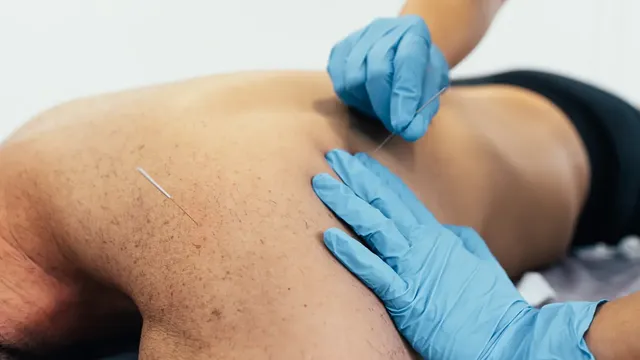
Dry needling for shoulder pain uses a thin, sterile filament to release tight knots, called trigger points, in the rotator cuff, upper trapezius, and other muscles that move the shoulder. Dry needling works best for muscle-driven shoulder pain and stiffness, and it works best as one part of a plan that includes hands-on care and strengthening.
Shoulder pain has a way of showing up everywhere. It is there when you reach for a high shelf, fasten a seatbelt, or roll onto that side at 2 a.m. Whether you are a swimmer whose stroke feels pinched or a grandparent who winces lifting a toddler into a car seat, the question is the same: will this actually help?
In my practice at Helms Performance in Bethesda, MD, shoulder pain is one of the most common reasons people ask about dry needling. Here is an honest look at what it does well, where it falls short, and what a visit looks like.
Dry needling helps when tight, overworked muscles are a big part of your shoulder pain, and it helps most when it is paired with hands-on work and the right exercises.
How Does Dry Needling for Shoulder Pain Work?
Your shoulder is the most mobile joint in your body, and it depends on a team of muscles to stay steady. When some of those muscles get overworked, small areas inside them can stay contracted. These trigger points feel like tender knots, and they often send pain somewhere else. A trigger point in the back of the shoulder blade, for example, commonly refers pain to the front and side of the shoulder.
Dry needling places a filament directly into that knot. The muscle often responds with a quick twitch, then relaxes. Many people notice that the shoulder moves more freely right afterward, which gives us a window to retrain how it moves. For a fuller explanation, see our guide on how dry needling works.
Which Shoulder Muscles Do We Usually Treat?
The muscles we needle depend on where you feel pain and what we find on exam. These are the ones that come up most often:
- Infraspinatus: a rotator cuff muscle on the back of the shoulder blade. Trigger points here often cause a deep ache in the front of the shoulder.
- Supraspinatus: the rotator cuff muscle on top of the shoulder blade that helps lift the arm out to the side.
- Upper trapezius: the muscle between the neck and shoulder that tightens up during long days at a desk or behind the wheel.
- Teres minor and the back of the deltoid: smaller muscles that work hard during throwing, swimming, and reaching behind you.
- Pectoralis minor: a small chest muscle that can pull the shoulder forward and crowd the space the rotator cuff moves through.
What Shoulder Problems Can Dry Needling Help?
Dry needling is a good fit when muscle tension is a real contributor. Research reviews have found it can reduce shoulder pain in the short term, especially when it is combined with exercise. Conditions where we often use it include:
- Rotator cuff irritation and tendinopathy: pain from overused rotator cuff tendons, often felt when lifting the arm.
- Shoulder impingement: a pinching feeling at the top of the shoulder when you raise your arm overhead.
- Neck and upper shoulder tension: the tight, achy band that builds through a workday at the laptop.
- Overuse from sport or work: tennis, swimming, pickleball, painting a ceiling, or carrying a baby on one hip.
It is not the right main treatment for every shoulder. A full-thickness rotator cuff tear, a dislocation, or a joint that has truly stiffened, as in frozen shoulder, needs a different plan, though needling can still ease the muscle guarding around it. Pain that starts in the neck can also show up in the shoulder, which is why the exam comes first. If shoulder pain comes with chest pressure, shortness of breath, or sweating, call 911.
What Happens at a Shoulder Dry Needling Visit?
Your first visit starts with a conversation and an exam, not a needle. We check how your shoulder moves, test the strength of the rotator cuff, look at your neck and upper back, and find the trigger points that reproduce your pain. If dry needling makes sense, here is how it usually goes:
- We explain the plan. You will know which muscles we are treating and why before anything happens.
- We place a few filaments. Most people feel a small pinch, then a deep ache or twitch as the muscle lets go.
- We pair it with hands-on care. Joint mobilization, soft tissue work, or a chiropractic adjustment to the upper back, depending on your exam.
- We retest and teach. We recheck your range of motion and give you one or two exercises to keep the gains.
Every visit is a full hour, one-on-one with Dr. Helms, at a flat fee of $165. Our dry needling service in Bethesda page has more on how visits work. Many people notice a change within the first two or three visits when muscles are a big part of the problem. We reassess around the fourth to sixth visit, and if things have not shifted, we change the plan.
How Do You Keep the Shoulder Feeling Better?
Dry needling helps a tight muscle relax. Strength is what keeps it from tightening back up. That is where sports physical therapy comes in. We build up the rotator cuff and the muscles around the shoulder blade with simple exercises, such as banded rows and side-lying external rotation, so your shoulder can handle reaching, lifting, and overhead work again.
Expect some muscle soreness for 24 to 48 hours. A walk is the best thing for it. Moderate lifting is fine, but skip a heavy max-effort press for a day or two. Our post on dry needling side effects covers what is normal.
If you want to compare approaches, our article on chiropractic for shoulder pain explains how joint work fits in, and our shoulder pain care in Bethesda page shows how we bring it all together.
Dr. Paul Helms is a sports chiropractor at Helms Performance in Bethesda, MD, with advanced training in dry needling, Active Release Technique, and sports physical therapy. He has worked with everyone from desk workers and retirees to professional athletes in the NFL and NBA.
Dr. Paul's Final Thoughts
Dry needling is not magic, and it is not meant to work alone. For shoulder pain driven by tight, overworked muscles, though, it is one of the quickest ways I know to help someone move more comfortably, and that gives us room to rebuild strength.
If your shoulder has been nagging you for weeks, an exam will tell us whether dry needling belongs in your plan. Whether you want to get back to the pool or simply reach the top shelf without wincing, we will help you get back to work, back in the game, and back to the activities you love.