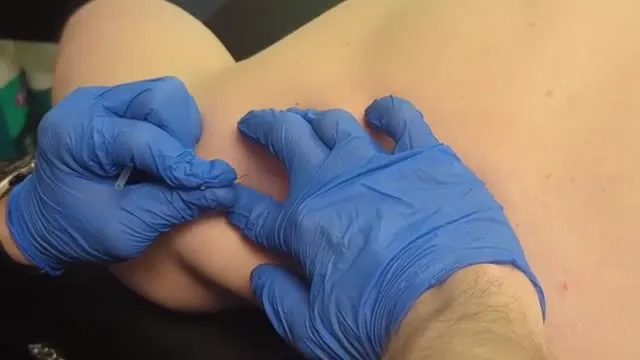
In one sentence: dry needling is a treatment where a thin, sterile needle is placed into a tight muscle knot to help that muscle release and ease your pain. That is the whole idea.
Whether you are a tennis player whose shoulder has tightened up or a grandparent whose neck stiffens after a long drive to visit the kids, the questions tend to be the same. How does it work? Does it hurt? Who is it for? In my practice at Helms Performance in Bethesda, MD, dry needling is one of the most common tools I reach for when a muscle simply will not let go, and here is everything you would want to know before trying it.
What Is Dry Needling?
Dry needling is a treatment that uses a thin, solid filament, much finer than the needle used for a shot, placed directly into a tight band of muscle called a trigger point. The word "dry" means the needle carries no medication. Nothing is injected. The needle itself does the work by helping the muscle relax, easing tension, and improving blood flow to the area.
It comes from Western sports medicine and is grounded in how muscles, nerves, and connective tissue actually behave. When the filament reaches a trigger point, the muscle often gives a quick twitch and then begins to release. That twitch is a good sign. It tells us the needle found the right spot. If you want the deeper explanation, we walk through it step by step in how dry needling works.
A very fine needle reaches a tight muscle knot, the muscle twitches and lets go, and the area loosens up. No medication, just a precise nudge that helps the muscle relax.
Think dry needling might be what you need? Dr. Helms will confirm whether it fits your situation, honestly.
Book An AppointmentWhat Conditions Dry Needling Helps
Because it works directly on muscle, dry needling shows up in a lot of everyday situations we see at Helms Performance in Bethesda. It is not only for athletes. Some of the most common reasons people come in are surprisingly ordinary:
- Stubborn neck and shoulder tension from long hours at a desk or behind the wheel
- Low back tightness that makes bending or sitting uncomfortable
- Tight calves and hips that nag at runners, walkers, and gardeners alike
- Trigger points that feed headaches, jaw tension, or pain that travels down an arm or leg
- Sports injuries that have mostly healed but still feel stiff or restricted
- Chronic muscle tightness that stretching alone never quite resolves
If any of those sound familiar, dry needling may be worth a conversation. It is not the only tool we use, and it is not right for every kind of pain. That is exactly why the first step is always a hands-on exam, not a needle.
What a Dry Needling Session Looks Like at Helms Performance
If you have never had dry needling, not knowing what to expect is the most common worry, and a fair one. Here is how a typical visit goes:
- We talk and examine first. Dr. Helms reviews your history and does a hands-on exam to find the muscles driving your pain and confirm dry needling is a good fit.
- You get comfortable. You lie or sit in a relaxed position, and the area is cleaned. The filaments are single-use and sterile, opened fresh in front of you.
- The needle goes in. A thin filament is placed into the trigger point. Most people barely feel the entry. The muscle may give a quick twitch, which is the response we are looking for.
- The muscle releases. The needle stays in briefly while the tissue softens. You might feel a deep, achy heaviness for a moment, then a sense of loosening.
- We pair it with a plan. Dry needling is rarely the whole treatment. We add hands-on care and a few targeted exercises so the relief lasts.
Throughout, you stay in control. Dr. Helms walks you through each step and adjusts as he goes, so you always know what is happening and never have to grit through it.
How Dry Needling Differs from Acupuncture
This is the question almost everyone asks. Dry needling and acupuncture both use thin needles, but they are different treatments. Dry needling comes from Western sports medicine and targets tight muscle knots to relieve pain and restore movement. Acupuncture comes from traditional Chinese medicine and works with the body's energy pathways to support overall balance and wellness.
Same tool, different map. One follows muscles and anatomy, the other follows energy meridians. If you want the full side-by-side, we cover it in dry needling vs. acupuncture.
What to Expect After Your Session
Most people walk out feeling looser, with easier movement in the area we treated. It is also common to feel mild soreness for a day or two afterward, similar to how you feel after a good workout. That soreness is normal and usually fades on its own.
A few simple things tend to help in the day after:
- Drink water and keep moving gently rather than sitting still all day
- A little warmth on the area can ease residual tightness
- Hold off on a brand-new, very hard workout for a day if the area feels tender
If you are curious about the sensation itself, we cover it honestly in does dry needling hurt. And if anything ever feels genuinely sharp or off, tell us. The goal is always relief and reassurance, never pushing past your comfort.
Dr. Paul's Final Thoughts
So, what is dry needling? A precise, drug-free way to help a tight muscle let go, restore movement, and relieve pain that stretching and rest have not solved on their own. It is grounded in real anatomy, it is performed by trained, licensed providers, and at its best it is one part of a plan that also includes hands-on care and movement.
It is not right for every ache, and it is no substitute for a proper exam. Whether you are a competitive athlete or simply someone who wants to garden, sleep, and move without a nagging knot, the best next step is to have someone look at it in person. We would be glad to help you figure out what is going on and whether dry needling is the right fit for you.