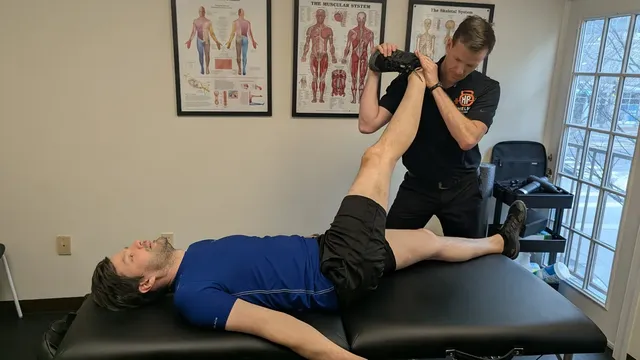
Dry needling for plantar fasciitis targets tight trigger points in the calf and the small muscles of the foot, which add strain to the plantar fascia on the bottom of your heel. A 2014 randomized trial found dry needling reduced heel pain more than a sham treatment over six weeks. Dry needling works best alongside stretching and strengthening.
If you have plantar fasciitis, you know the first step out of bed. That sharp, bruised feeling under the heel can make the walk to the coffee maker the hardest part of your day. Whether you are a runner training for the Marine Corps Marathon or a nurse on your feet for a 12-hour shift, heel pain that lingers for months wears you down.
In my practice at Helms Performance in Bethesda, MD, many people come in for heel pain after months of rolling a frozen water bottle and buying new shoes. Dry needling is often the piece that helps the rest of the plan finally work. Here is how.
Dry needling does not treat the fascia itself. It relaxes the tight muscles that keep pulling on it, which makes room for the stretching and strengthening that lead to lasting relief.
How Does Dry Needling for Plantar Fasciitis Work?
The plantar fascia is a thick band of tissue that runs from your heel bone to your toes. It supports your arch every time you take a step. When it is overloaded, the spot where it attaches to the heel gets irritated and sore.
The fascia does not work alone. Your calf muscles connect to the heel through the Achilles tendon, and small muscles inside the foot help hold up the arch. When those muscles are tight and full of trigger points, they add tension to the whole system. A trigger point is a tight, tender knot in a muscle that can also send pain to nearby areas.
Dry needling places a thin, sterile filament into those knots. The muscle often twitches briefly, then relaxes. With less pull from the calf and foot muscles, the plantar fascia gets a break, and stretching and strength exercises tend to work better.
Which Muscles Do We Needle for Heel Pain?
We choose based on your exam. These muscles come up most often:
- Gastrocnemius: the large calf muscle you can see. Tightness here limits how far your ankle bends, which puts extra stress on the heel.
- Soleus: a deeper calf muscle that works hard during walking and running. Trigger points here can send pain toward the heel.
- Abductor hallucis: a muscle along the inside of the foot that supports the arch.
- Quadratus plantae and flexor digitorum brevis: small muscles on the bottom of the foot that help your toes grip and push off.
Needling the bottom of the foot can be more tender than needling a calf or shoulder, and I will tell you that up front. We go at your pace, and many plans start with the calf.
What Does the Research Say?
The best-known study is a randomized trial by Cotchett and colleagues, published in 2014. People with plantar heel pain got either real dry needling or a sham version once a week for four weeks. After six weeks, the dry needling group reported less heel pain than the sham group. The improvement was modest, and some people noticed short-term soreness, which matches what I see in practice.
Because the effect is modest, I pair needling with other care. It helps calm the area down, and the stretches and strength work are what change the heel over time. If you want the basics first, our guide on what dry needling is covers them.
What Does a Plantar Fasciitis Treatment Plan Look Like?
Your first visit is an exam, not a needle. We look at how your ankle bends, how your foot handles your weight, your calf and hip strength, and your daily routine, including shoes and how many hours you spend standing. Then we build a plan that usually includes:
- Dry needling for tight calf and foot muscles, when your exam supports it.
- Hands-on care such as Active Release Technique, a massage and movement-based technique that treats problems with muscles, tendons, ligaments, fascia, and nerves.
- Targeted stretches for the calf and plantar fascia. Our plantar fasciitis stretches guide shows the ones worth your time.
- Strength work such as slow heel raises, which help the tissue handle more load over time.
- Simple load changes such as trimming mileage for a few weeks or adding a short sitting break to a long day on your feet.
Many people notice the morning pain easing within the first few visits. Plantar fasciitis that has been around for months usually takes several weeks to settle, and the strength work is what keeps it from coming back. Every visit is a full hour, one-on-one with Dr. Helms, at a flat fee of $165.
What Should You Expect After a Session?
Your calf or foot may feel sore for 24 to 48 hours, a bit like the day after a hilly run. A walk or an easy jog is the best thing for it. You can keep training at a moderate level, but skip a hard speed session or a race-effort run for a day or two.
Call us if soreness is getting worse after 48 hours, or if you notice redness, warmth, or swelling at a needle spot. Our post on dry needling side effects walks through what is normal. You can also read how Active Release Technique helps plantar fasciitis, or see our dry needling service in Bethesda page.
Dr. Paul Helms is a sports chiropractor at Helms Performance in Bethesda, MD, with advanced training in dry needling, Active Release Technique, and sports physical therapy. He works with weekend runners, people who stand all day for work, and professional athletes alike.
Final Thoughts from Dr. Helms
Plantar fasciitis is stubborn, but it is very treatable. When tight calf and foot muscles are part of the picture, dry needling can take enough strain off the heel that stretching and strengthening finally start to pay off.
If your first steps in the morning still hurt after a few weeks of home care, come see us. Whether you want to get back to your long runs or just walk the dog without limping, we will help you get back to work, back in the game, and back to the activities you love.