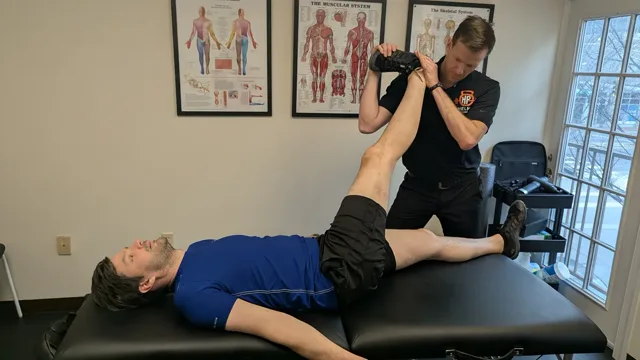
Active Release Technique treats plantar fasciitis by working the soft tissue from the heel up through the calf, not only the painful spot underfoot. The clinician holds the restricted tissue while you move the foot and ankle through range, which helps free up adhesions limiting how that tissue glides.
Active Release Technique for plantar fasciitis is one of the hands-on tools I reach for most when that first painful step out of bed just will not go away. Plantar fasciitis is rarely just a foot problem. Whether you are a runner whose heel bites at the start of every mile or a teacher who is on your feet in the classroom all day, the tight tissue behind the pain usually runs from your heel up into your calf. In my practice at Helms Performance in Bethesda, MD, treating that whole chain, not only the sore spot, is what tends to move the needle.
Before we go further, one important note. Heel pain has more than one possible cause, so a proper diagnosis comes first. This article explains how Active Release Technique can help once plantar fasciitis has been confirmed by a professional. If you are unsure what is causing your pain, that is exactly what an exam is for.
How Active Release Technique for Plantar Fasciitis Works
Active Release Technique, often shortened to ART, is a massage and movement-based technique that treats problems with muscles, tendons, ligaments, fascia, and nerves. In plain terms, the provider uses hands-on pressure while you move the area through its range, so the treatment works the tissue as it lengthens and glides.
Plantar fasciitis involves the plantar fascia, the thick band of connective tissue that runs along the bottom of your foot and supports your arch. When that tissue and the muscles feeding into it get tight and irritated, every step can pull on an already sensitive heel. ART aims to restore healthy movement in that tissue, ease the tension, and help the area calm down so it can heal.
ART uses guided pressure and movement to free up the tight fascia and calf tissue that keep tugging on a sore heel.
What ART Targets in the Foot and Calf
Here is the part many people miss. The heel is where you feel plantar fasciitis, but the tightness that feeds it often lives higher up. Your calf muscles connect through the Achilles into the back of the heel, and when they are stiff, they add a constant pull on the plantar fascia. That is why treating the foot alone often falls short.
With ART for plantar fasciitis, we usually work several linked areas:
- The plantar fascia along the arch and toward the heel, where the pain shows up
- The calf muscles, the gastrocnemius and soleus, which pull on the heel through the Achilles
- The small muscles of the foot that support your arch and take a beating with each step
- The Achilles region, where calf tension transfers straight down to the heel
Freeing up this whole chain, rather than only the tender spot, is what makes the relief more likely to hold. It also lines up with how we treat other lower-leg issues, so if your heel pain travels toward the ankle it is worth a look at how we approach ankle pain as well.
What a Treatment Session Looks Like
If you have never had ART, here is what to expect so nothing feels like a surprise. A typical session follows a simple flow.
- A quick check-in. We review how your heel has felt, what makes it worse, and how you moved since your last visit.
- Hands-on treatment. Dr. Helms applies firm, precise pressure to the tight tissue while you flex and point your foot, so the fascia and calf work through their range.
- Movement and home care. We add a few targeted stretches or exercises for your calf and foot to keep the tissue moving between visits.
- A plan for next time. We talk through how the area is responding and what to focus on before you come back.
ART is a firm technique, and some tender spots can be sensitive during treatment. It should stay within a manageable range, and I adjust the pressure to you. Most people feel a strong stretch and a sense of release, sometimes with mild soreness the next day, similar to a deep massage. Because ART is a form of hands-on Active Release Technique care, it pairs naturally with the rest of a treatment plan.
What to Expect Over the Course of Treatment
Plantar fasciitis did not appear overnight, and it usually does not resolve in a single visit. That said, many people notice a change fairly early, often within the first few sessions, as the tissue starts to move better and the heel calms down. I want to be honest that timelines vary from person to person, and stubborn cases can take longer.
ART works best as part of a bigger picture. On its own, hands-on work loosens the tissue, but lasting relief comes when we also address why the fascia got overloaded in the first place. That might mean calf and foot strengthening, a look at your footwear, gradual changes to your training, and a few daily habits. Our sports physical therapy often works hand in hand with ART for exactly that reason.
ART frees the tight tissue behind your heel pain. Pairing it with the right exercises and small daily changes is what helps keep the relief.
Dr. Paul's Final Thoughts
Plantar fasciitis can wear you down, that first step in the morning, the ache that creeps back by the afternoon. The good news is that it usually responds well to the right care. Active Release Technique gives us a direct way to work on the tight fascia and calf tissue driving the pain, and paired with targeted movement, it can help you get back to walking, standing, and training comfortably.
If heel pain is holding you back, you do not have to just push a heating pad on it and hope. Get it looked at, confirm what is going on, and start a plan that fits you. Dr. Paul Helms and the team at Helms Performance in Bethesda, MD are here to help you relieve the pain and get back to the activities you love.