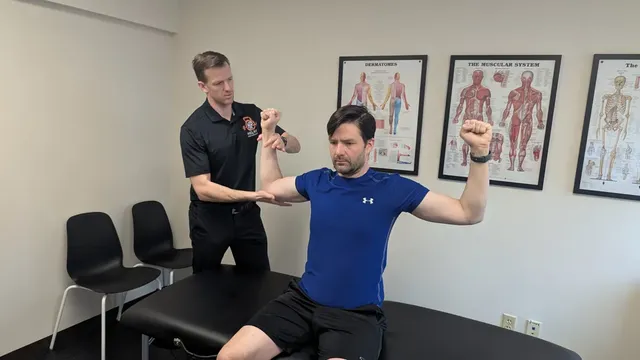
Sudden shoulder pain without injury most often comes from an irritated rotator cuff tendon, an inflamed bursa, or pain referred from the neck. These problems build quietly for weeks, then cross a threshold, so the pain feels sudden even though the cause is not. Most cases respond well to hands-on care and the right exercises.
Shoulder pain that shows up without a fall, a collision, or a bad lift tends to worry people. Whether you woke up unable to reach the top shelf, felt a sharp catch while serving in tennis, or noticed an ache after a weekend of painting the living room, the first question is usually the same: what did I do?
In my practice at Helms Performance in Bethesda, MD, I hear this story every week. The honest answer is that the shoulder usually was not hurt in one moment. A tendon or the tissue around it was slowly getting overloaded, and one ordinary movement finally made it speak up. That is good news, because overload problems are very treatable once you know the source.
Shoulder pain without an injury is usually a tendon, a bursa, or the neck reaching its limit after weeks of quiet overload, and an exam tells you which one.
What Causes Sudden Shoulder Pain Without Injury?
Most cases fall into one of four groups. These are patterns I look for during an exam. They are clues, not a diagnosis.
| Likely source | How it tends to feel |
|---|---|
| Rotator cuff tendon | An ache on the outside of the upper arm that hurts when you reach overhead or behind your back |
| Inflamed bursa or calcium deposit | A sharp, intense pain that can come on over a day or two and makes lying on that side hard |
| The neck | Shoulder pain with neck stiffness, or tingling that travels down the arm |
| Stiffening of the joint capsule | A deep ache with a steady loss of motion in every direction, often called frozen shoulder |
Pain that does not change at all with movement or position does not fit any of these patterns and is worth a visit to your physician.
Can the Rotator Cuff Hurt Without an Injury?
Yes, and it is the most common reason I see. The rotator cuff is a group of four small muscles and their tendons that keep the ball of the shoulder centered in its socket. They work every time you lift, reach, or carry something.
A tendon gets irritated when the load on it rises faster than it can adapt. That might be a new workout, a busy week of yard work, a long drive with your arm on the wheel, or simply sleeping on the same side every night. The tendon handles it for a while, then one day reaching for your seatbelt hurts.
After about age 50, small wear-related tears in the rotator cuff also become more common, and many of them never cause pain at all. When they do, the pain can seem to appear out of nowhere. An exam helps sort out whether the tendon is irritated, weak, or both, and our shoulder pain treatment in Bethesda, MD page explains how we approach each one.
Could My Neck Be Causing My Shoulder Pain?
Quite often. The nerves that supply the shoulder start in the neck. When a joint, disc, or nerve in the lower neck gets irritated, you can feel the pain over the top of the shoulder, the back of the shoulder blade, or down the upper arm, even if your neck barely hurts.
A few clues point toward the neck. The pain changes when you turn or tilt your head. You notice tingling, numbness, or weakness in the arm or hand. Or your shoulder moves freely but still aches. Long hours looking down at a laptop or phone are a common trigger. Our neck pain treatment page covers this pattern in more detail.
What Inflammatory Causes Should You Know About?
Some shoulder pain comes from inflammation rather than overload alone.
- Bursitis. A bursa is a small fluid-filled cushion that lets the tendons glide. When it gets inflamed, reaching overhead and lying on that side become painful.
- Calcific tendinitis. A small calcium deposit forms inside a rotator cuff tendon. It can sit quietly for years, then flare into some of the sharpest shoulder pain people ever feel, often with no clear trigger. It is most common between ages 30 and 60.
- Frozen shoulder. The capsule around the joint becomes inflamed, then thick and tight. It starts as pain and slowly turns into stiffness. It is most common between ages 40 and 60 and more likely in people with diabetes or thyroid conditions.
Each of these responds best when it is identified early, because the plan for a calcium flare is very different from the plan for a stiffening joint.
When Should You Get It Assessed, and When Can You Wait?
Waiting a few days is reasonable when the pain is mild, changes with movement, and is slowly getting better. In the meantime:
- Keep the shoulder moving gently. Pendulum swings and easy reaching within a comfortable range help more than holding the arm still.
- Cut back, do not stop. Pause the overhead lifting or the activity that set it off, but keep using the arm for daily tasks.
- Sleep with support. Lie on the other side and hug a pillow so the sore arm rests at shoulder height.
- Walk. Light activity like an easy walk keeps blood moving and often eases the ache.
Book an exam if the pain lasts more than two weeks, keeps you up at night, or keeps you from reaching overhead. See your physician first if you have a fever or a hot, red, swollen shoulder, pain that does not change with movement or position, sudden weakness where you cannot lift the arm, stiffness and aching in both shoulders in the morning after age 50, or unexplained weight loss.
How Does Helms Performance Treat Shoulder Pain?
Your first visit starts with a full exam of your shoulder, neck, and upper back. I check how the shoulder moves, how strong each part of the rotator cuff is, and whether the neck changes your symptoms. We usually start treatment that same hour. Because Helms Performance offers both sports chiropractic and sports physical therapy, your plan can include:
- Active Release Technique. A massage and movement-based technique that treats problems with muscles, tendons, ligaments, fascia, and nerves. Read more about Active Release Technique for shoulder pain.
- Dry needling. A thin, solid needle placed into a tight, tender spot in the muscle to help it relax.
- Chiropractic care. Gentle joint work for the neck and upper back when they are part of the problem.
- Sports physical therapy. A progressive strengthening plan for the rotator cuff and shoulder blade muscles, so the tendon can handle your daily load again.
Every visit is a full hour at a flat fee of $165. Mild soreness for a day or two after treatment is normal, and an easy walk helps it settle.
Dr. Paul Helms is a sports chiropractor at Helms Performance in Bethesda, MD, with advanced training in Active Release Technique, dry needling, and sports physical therapy. He works with patients across the whole range, from desk workers and retirees to professional athletes in the NFL and NBA.
Final Thoughts from Dr. Helms
Shoulder pain that appears without an injury feels mysterious, but it usually has a clear explanation. Most of the time, a tendon, a bursa, or the neck has been carrying more than it could handle. Rule out the medical causes first. Then the plan is usually straightforward: calm the irritated tissue, restore motion, and build strength so the shoulder can handle your day.
Whether you want to lift your carry-on into the overhead bin without wincing or get back to your swim workouts, we will help you get back to work, back in the game, and back to the activities you love.