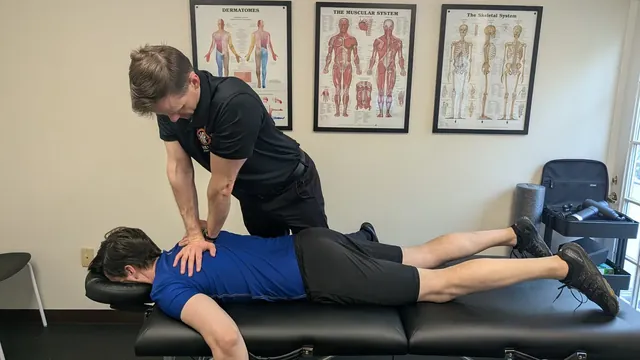
Pain between the shoulder blades most often comes from tight, overworked muscles in the upper back, especially after long hours at a desk, behind the wheel, or looking down at a phone. Less often, it comes from stiff joints in the mid-back or an irritated nerve in the neck. Most cases improve with hands-on care, movement, and simple strengthening.
That nagging ache between your shoulder blades usually is not random. Whether you spend your day on video calls, carry a toddler on one hip, or just finished a long weekend of golf, the muscles that hold your shoulder blades in place are working the whole time. When they get tired, they let you know.
In my practice at Helms Performance in Bethesda, MD, this is one of the most common complaints I hear from desk workers, drivers, and parents of young kids. Most of the time, it is muscular and very treatable. The key is finding out which structure is actually driving it, because that shapes the plan.
Pain between the shoulder blades is usually tired, tight upper back muscles, sometimes with a stiff mid-back joint or an irritated neck nerve, and an exam tells you which.
What Causes Pain Between the Shoulder Blades?
Most cases fall into one of four groups. These are patterns I look for during an exam. They are clues, not a diagnosis.
| Likely source | How it tends to feel |
|---|---|
| Muscle tension | A dull, burning ache that builds through the day and eases with movement |
| Mid-back or rib joints | A sharp, pinpoint spot that catches when you twist or take a deep breath |
| A nerve in the neck | Shoulder blade pain with neck stiffness, or tingling down one arm |
| A medical problem | Pain that does not change with movement or position, which is worth a visit to your physician |
Many people have more than one of these at the same time. Muscle tension and stiff mid-back joints are an especially common pair.
Why Are Posture and Muscle Tension the Most Common Drivers?
Several muscles attach to the inside edge of each shoulder blade. The rhomboids pull the shoulder blades together. The middle trapezius helps hold them back and steady. When you reach forward to type, drive, or hold a phone, these muscles stay switched on for hours to keep your arms and head supported.
The research on posture is more nuanced than most people think. There is no single perfect posture, and slouching does not damage your spine. The bigger problem is staying in any one position for too long. Muscles that never get a break become tired, tight, and tender. That is why the ache often builds through the afternoon and feels better after a walk.
Other common contributors include stress, poor sleep, a new workout routine, carrying a heavy bag on one shoulder, and long hours on a laptop with the screen well below eye level.
When Is the Spine Involved?
The mid-back, called the thoracic spine, has 12 vertebrae. Each one connects to a pair of ribs. When one of these small joints gets stiff or irritated, you can feel a sharp spot right next to the spine. It often catches when you twist, reach overhead, or take a deep breath.
The neck can also send pain to this area. An irritated nerve or disc in the lower neck often causes pain along the inside edge of the shoulder blade, even when the neck itself barely hurts. Tingling, numbness, or weakness down one arm makes the neck a more likely source. Our neck pain treatment in Bethesda, MD page covers this in more detail.
When Should You See a Provider, and When Can You Try Self-Care?
Self-care is a reasonable first step when the pain started after a long week at the desk or a new activity, changes with movement, and is slowly getting better. Try these for one to two weeks:
- Move every 30 to 60 minutes. Stand up, roll your shoulders, and walk for a minute or two.
- Raise your screen. Set the top of your monitor near eye level so you are not looking down all day.
- Open up the mid-back. Sit tall, clasp your hands behind your head, and gently lean back over the top of your chair. Repeat 10 times.
- Strengthen the upper back. Rows with a resistance band, 2 sets of 12, help those tired muscles handle the load.
See a provider if the pain lasts more than two weeks, keeps coming back, wakes you up at night, or comes with tingling or weakness in your arm. See your physician first if you have pain with a cough or fever, pain under the right shoulder blade after fatty meals, a burning pain with a rash, or a history of cancer.
What Are the Treatment Options at Helms Performance?
Your first visit starts with a full exam of your neck, mid-back, ribs, and shoulders. I check how each area moves and which spots reproduce your pain. We usually start treatment that same hour. Because Helms Performance offers both sports chiropractic and sports physical therapy, your plan can include:
- Chiropractic adjustments. Gentle, specific joint work to restore motion in a stiff mid-back or rib joint. Our sports chiropractor page explains what to expect.
- Active Release Technique. A massage and movement-based technique that treats problems with muscles, tendons, ligaments, fascia, and nerves. We often use it on the rhomboids and the muscles of the neck. Read how ART helps neck pain.
- Dry needling. A thin, solid needle placed into a tight knot in the muscle to help it relax. Our post on dry needling for shoulder pain covers how it feels.
- Sports physical therapy. A simple strengthening plan for the upper back and shoulders, so the muscles can handle your workday without flaring up.
Every visit is a full hour at a flat fee of $165. Mild soreness for a day or two after treatment is normal, and an easy walk helps it settle.
Dr. Paul Helms is a sports chiropractor at Helms Performance in Bethesda, MD, with advanced training in Active Release Technique, dry needling, and sports physical therapy. He works with patients across the whole range, from desk workers and retirees to professional athletes in the NFL and NBA.
Dr. Paul's Final Thoughts
Pain between the shoulder blades is common, and in most cases it is the body asking for more movement and a bit more strength. Rule out the serious causes first. Then the plan is usually straightforward: calm the tight muscles, free up the stiff joints, and build an upper back that can handle your day.
Whether you want to make it through a full workday without rubbing your back or get back to swimming laps, we will help you get back to work, back in the game, and back to the activities you love.