Upper back pain is most often caused by tired, overworked muscles and stiff joints in the thoracic spine, the 12 vertebrae between your neck and your low back. Long hours in one position, stress, and new physical demands are the usual triggers. Most upper back pain improves with movement, hands-on care, and targeted strengthening.
Upper back pain is less common than low back pain, which makes it more confusing when it shows up. Whether you are a rower feeling a tight band across your mid-back after practice or a parent who spent the weekend assembling furniture, the questions are the same: why here, and why now?
In my practice at Helms Performance in Bethesda, MD, the location of the pain is one of the most useful clues I have. A tight ache at the top of the shoulders usually means something different than a sharp spot beside the spine. Below is the same map I use in the exam room, followed by what helps most for each pattern.
Upper back pain is usually muscular or a stiff spinal joint, the exact location points toward the source, and most cases respond to movement, hands-on care, and strength work.
What Causes Upper Back Pain?
The upper back is built for stability. The thoracic spine connects to your ribs, which makes it much stiffer than your neck or low back. That stability is why serious structural problems here are less common. It also means the muscles around it do a lot of steady, quiet work holding your head, arms, and shoulder blades in place.
The most common causes I see are:
- Muscle overload. The trapezius, rhomboids, and the long muscles beside the spine get tired from long hours at a desk, driving, or looking down at a phone.
- Stiff spinal or rib joints. Each thoracic vertebra forms small joints with a pair of ribs. When one stiffens, it can cause a sharp, local pain.
- A sudden jump in activity. A new rowing program, a weekend of yard work, or a move can overload tissues that were not ready for it.
- Referred pain from the neck. An irritated joint or nerve in the lower neck often sends pain into the upper back and shoulder blade.
- Stress and poor sleep. Both raise muscle tension and lower your tolerance for pain.
What Does the Location of Upper Back Pain Mean?
These are the patterns I look for. They are clues to guide an exam, not a self-diagnosis.
| Where it hurts | What it often points to |
|---|---|
| Top of the shoulders and base of the neck | Tight upper trapezius muscles, often from desk work, stress, or carrying a bag on one side |
| Between the shoulder blades | Tired rhomboid and middle trapezius muscles, a stiff mid-back joint, or a nerve in the lower neck |
| A sharp spot right beside the spine | An irritated spinal or rib joint, especially if it catches when you twist or breathe deeply |
| A band around the rib cage | An irritated rib joint or nerve between the ribs, often worse with twisting or reaching |
| Under one shoulder blade | Usually muscular, but pain under the right shoulder blade after fatty meals is worth a visit to your physician |
Many people have more than one pattern at once. Our full guide to pain between the shoulder blades goes deeper on the most common one.
Is My Upper Back Pain From Posture or Something Structural?
Posture gets blamed for almost everything, and the research is more nuanced than most people think. There is no single perfect posture, and slouching does not damage your spine. The real problem is staying in any one position for too long. Muscles that never get a break become tired and sore. Posture-related pain usually builds through the day, eases when you move, and feels better on weekends.
Structural causes are less common but worth knowing:
- Scoliosis. A sideways curve of the spine can load one side of the back more than the other.
- A rounded upper back from adolescence. Some people develop a stiffer, more curved upper back in their teens that can ache later in life.
- Compression fractures. In people with osteoporosis, a vertebra can fracture after a minor strain or even a cough. Sudden, sharp mid-back pain in an older adult needs an X-ray before treatment.
- Disc problems. Disc injuries in the thoracic spine are much less common than in the neck or low back, but they do happen.
Pain that follows a clear pattern with movement and position is usually mechanical and very treatable. Pain that stays the same no matter what you do deserves a closer look.
What Treatment Options Actually Help Upper Back Pain?
Your first visit at Helms Performance starts with a full exam of your neck, mid-back, ribs, and shoulders. I check how each area moves and which spots reproduce your pain. We usually start treatment that same hour. Your plan can include:
- Chiropractic adjustments. Gentle, specific joint work to restore motion in a stiff spinal or rib joint. Our sports chiropractor page explains what to expect.
- Active Release Technique. A massage and movement-based technique that treats problems with muscles, tendons, ligaments, fascia, and nerves, often used on the trapezius and rhomboids.
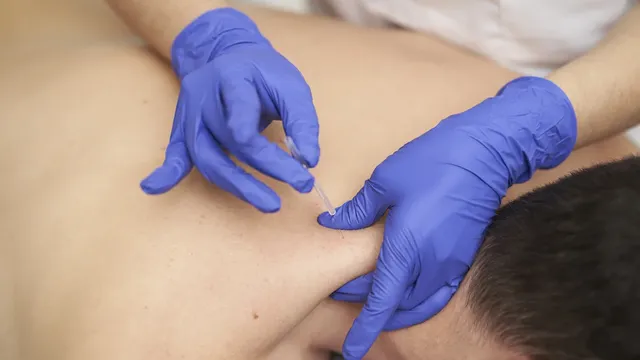
- Dry needling. A thin, solid needle placed into a tight knot in the muscle to help it relax.
- Sports physical therapy. A strengthening plan for the upper back and shoulder blade muscles, so they can handle your workday without flaring up.
Every visit is a full hour at a flat fee of $165. Mild soreness for a day or two after treatment is normal, and an easy walk helps it settle. Our back pain treatment in Bethesda, MD page covers our full approach.
How Can You Prevent Upper Back Pain?
Small changes make the biggest difference:
- Move every 30 to 60 minutes. Stand up, roll your shoulders, and walk for a minute or two.
- Set up your screen. Put the top of your monitor near eye level and keep your laptop off your lap for long sessions.
- Open up the mid-back daily. Sit tall, clasp your hands behind your head, and gently lean back over the top of your chair 10 times.
- Strengthen twice a week. Band rows and pull-aparts, 2 sets of 12, build the muscles that hold your shoulder blades.
- Build load gradually. Add new training or a big project a little at a time.
See your physician first if your upper back pain comes with fever, unexplained weight loss, a history of cancer, a burning pain with a rash, or pain that does not change with movement or position.
Dr. Paul Helms is a sports chiropractor at Helms Performance in Bethesda, MD, with advanced training in Active Release Technique, dry needling, and sports physical therapy. He works with patients across the whole range, from desk workers and retirees to professional athletes in the NFL and NBA.
Dr. Paul's Final Thoughts
Upper back pain is common, and in most cases it is the body asking for more movement and a bit more strength. Pay attention to where it hurts and what makes it better or worse, because those details point toward the source. Rule out the medical causes, then calm the tight muscles, free up the stiff joints, and build an upper back that can handle your day.
Whether you want to finish a full workday without rubbing your shoulders or get back to rowing on the Potomac, we will help you get back to work, back in the game, and back to the activities you love.