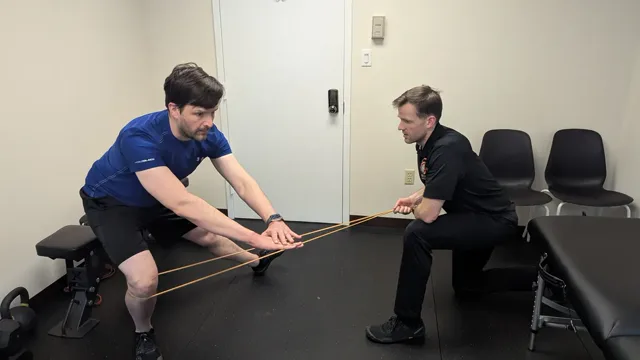
Telehealth physical therapy is a full physical therapy visit delivered over secure video, and if you have never done one, the format is easier to picture than you might think.
Whether you are a cyclist trying to settle a knee before race season, or someone who just wants their back to stop aching by Thursday afternoon, the visit follows the same shape as an in-clinic appointment. In my practice at Helms Performance in Bethesda, MD, the most common thing I hear afterward is that people expected something like a video tutorial and got an actual appointment instead.
Here is exactly what happens, start to finish, so you know what you are signing up for.
How Telehealth Physical Therapy Works, Step by Step
A first virtual visit usually runs somewhere between forty five minutes and an hour. It breaks into five parts.
- Booking and setup. You book online and receive a secure video link. There is no app to install and no account to create. You click the link at your appointment time.
- The conversation. We start with your history. When the problem started, what makes it better or worse, what you have already tried, and most importantly what you are trying to get back to. This part matters more than people expect, because it usually narrows the possibilities considerably.
- The movement assessment. I ask you to perform a series of simple movements on camera. Squatting, balancing on one leg, reaching overhead, bending forward. I am watching how you move, where the motion runs out, and which side compensates.
- Treatment and coaching. We start work in the same visit. I walk you through specific exercises and self-treatment techniques, correcting your form as you go so you leave knowing what good repetitions feel like.
- Your plan. You finish with a written plan: which exercises, how often, what to expect, and what would tell us to change course.
You do not need to prepare anything clinical in advance. Wearing clothes you can move in and having a bit of floor space is genuinely the whole preparation.
What You Need for a Virtual Visit
The technical requirements are modest on purpose.
- A device with a camera. A phone, tablet, or laptop all work. A phone propped against something is often easier than a laptop, because it is simpler to angle.
- Space to move. Roughly six feet of open floor is plenty. A living room or a bedroom is fine.
- Room to be seen head to toe. Set the camera back far enough that I can see your whole body when you stand. This is the one setup detail worth getting right.
- Clothes you can move in. Whatever you would wear to exercise.
- A quiet spot. Somewhere you can hear and be heard without much competition.
That is the entire list. No treadmill, no equipment, no measuring tools.
How an Assessment Works Without Hands
This is the part most people are skeptical about, and it is a fair question to raise. If I cannot touch the joint, what am I actually learning?
Quite a lot, as it turns out. A physical exam has always relied heavily on observation and on what movements provoke or relieve symptoms. On video I can see how you shift your weight, whether one hip drops when you stand on one leg, how far your shoulder travels before it hitches, and where in a squat your form changes. I can ask you to press on a specific spot and tell me what you feel, which gives me much of what palpation would.
What I lose is the feel of the joint under my hands and the ability to treat it directly. That is a real limitation and I do not pretend otherwise. When a case needs that, I say so and we arrange hands-on care through our sports physical therapy instead.
What Happens Between Visits
Here is the part that decides whether virtual care works for you. In a clinic, a meaningful share of your progress happens during the appointment. In virtual care, nearly all of it happens in the days between appointments.
That is not a drawback so much as a redistribution. Your plan is built to be done at home, and follow-up visits exist to check your form, judge how the tissue is responding, and progress the load. If you do the work, the model is efficient. If the exercises sit untouched between sessions, no amount of video is going to help.
A virtual visit gives you the assessment, the plan, and the coaching. The results come from the twenty minutes a day you spend on it afterward.
How Follow-Up Visits Differ
Follow-ups are shorter, usually twenty to thirty minutes, and more focused. We review what has changed, watch a few key movements again to see whether your control has improved, troubleshoot anything that felt wrong, and progress the plan.
Spacing depends on the problem. Early on, weekly or every other week is common. As you stabilize, visits often stretch to monthly check-ins that exist mainly to keep the plan moving forward. Many people who start with an injury end up staying on a lighter schedule simply to keep training well, which is how our telehealth physical therapy and coaching tends to work in practice.
Final Thoughts from Dr. Helms
The format sounds unfamiliar until you have done one, and then it is unremarkable. You talk, you move, you get coached, you leave with a plan. The main difference from an in-clinic visit is that you drove nowhere and you keep the plan in your own space, where you will actually use it.
If you are curious whether it would suit your situation, the simplest path is to book one visit and find out. I will tell you honestly in that first appointment whether virtual care is the right tool for what you are dealing with, or whether you would be better off with hands-on treatment. Either way you will leave knowing more about your problem than when you started.