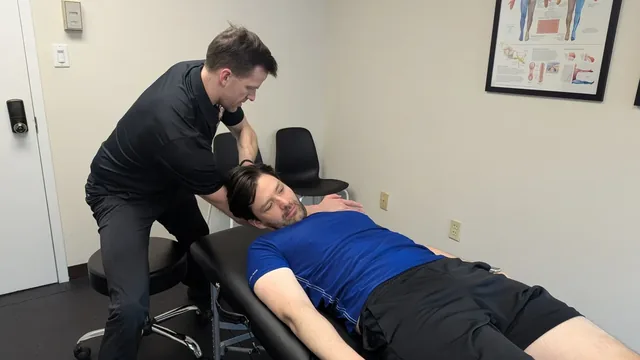
Can a chiropractor help with vertigo? Yes, when the vertigo comes from loose inner ear crystals, called BPPV, or from the neck, and when the chiropractor is trained to tell those two apart. BPPV is treated with a repositioning maneuver, not an adjustment. Neck-driven dizziness responds to hands-on care plus neck retraining exercises. Vertigo from migraine, infection, or medication needs a physician first.
The room spins when you roll over in bed. Or you feel off-balance walking the dog, and it always seems to travel with a stiff neck. Whether you are a runner who cannot trust your footing on a trail or a retiree who grips the rail on the stairs, vertigo shrinks your world fast.
In my practice at Helms Performance in Bethesda, MD, the most useful thing I do on a first vertigo visit is not a treatment. It is sorting out the cause. A lying-down test called the Dix-Hallpike takes under a minute and tells me whether the inner ear is involved. A neck exam tells me whether the neck is. The treatment that follows is different for each, and the wrong one does nothing.
A chiropractor can help with the two most common causes of vertigo, BPPV and the neck, but only after screening shows which one you have.
Can a Chiropractor Help With Vertigo?
It depends on the cause and on the chiropractor's training. Vertigo is a symptom, not a diagnosis. It is the sense that you or the room is moving, and it can come from the inner ear, the neck, the brain, the heart, or a medication. A chiropractor can help with two of those sources, and should screen for the rest.
The first source is BPPV, benign paroxysmal positional vertigo. Tiny calcium crystals in the inner ear drift into a canal where they do not belong and send a false spinning signal every time you tilt your head. It is the most common cause of vertigo, and it is treated with a repositioning maneuver, a series of head and body positions done on the table. Some chiropractors are trained in it and some are not, so ask before you book.
The second source is the neck. Stiff upper neck joints and tight muscles feed the brain a position signal that disagrees with what the eyes and inner ear report, and the mismatch feels like unsteadiness. This is called cervicogenic dizziness, and it is where chiropractic care and hands-on physical therapy earn their place.
Which Types of Vertigo Respond to Chiropractic Care?
Here is how the common causes sort out.
| Type of vertigo | What is going on | Can a chiropractor help? | What actually helps |
|---|---|---|---|
| BPPV (loose ear crystals) | Tiny crystals drift into the wrong part of the inner ear. The room spins for under a minute when you lie down, roll over, or look up. | Yes, if the chiropractor is trained in the repositioning maneuver. | A repositioning maneuver such as the Epley guides the crystals back into place. Most people need 1 to 3 visits. |
| Neck-related dizziness | Stiff joints and tight muscles at the top of the neck send the brain a faulty signal about where your head is. You feel unsteady more than you spin. | Yes. | Hands-on neck care plus neck retraining exercises. Most people improve over 2 to 6 weeks. |
| Migraine | A migraine can cause dizziness, with or without a headache. | No. This needs a physician. | Migraine care led by your physician. |
| An inner ear infection | An infection inflames the inner ear. The dizziness is constant and can last for days. | No. This needs a physician. | Your physician or an ENT, an ear, nose, and throat specialist. |
| Medication, blood pressure, heart, or neurological causes | The dizziness comes from a drug side effect, your circulation, or the brain itself. | No. This needs a physician. | Your physician, or emergency care if the symptoms are sudden. |
For most people the cause is one of these, not several. The exam checks the inner ear and the neck before anything is treated.
What Does a Sports Chiropractor Actually Do for Vertigo?
For BPPV, the treatment is the repositioning maneuver itself. The Epley maneuver moves your head and body through four positions, each held for about 30 seconds, and uses gravity to walk the crystals back out of the canal. It takes a few minutes, it usually brings on a brief burst of the spinning you came in with, and for the most common form of BPPV it settles the vertigo for most people within one to three visits.
For the neck, the work is hands-on and specific. Gentle mobilization of the upper cervical joints restores the movement the brain is missing, and soft tissue treatment eases the small muscles at the base of the skull that hold your head position. Where it fits, the visit can also include Active Release Technique, a massage and movement-based technique for tight muscles, or dry needling, which uses a very thin needle to help a tight muscle relax. Where an adjustment is appropriate, it is low-force and comes only after screening. Our sports chiropractic and neck pain pages explain the approach.
What Does the Physical Therapy Side Add?
This is where having both disciplines under one roof matters. Hands-on care calms the neck, and repositioning clears the crystals. The physical therapy side is what helps the relief last.
For neck-related dizziness, that means exercise. You learn two or three short drills that retrain and strengthen the deep muscles that hold your head steady, along with posture habits for the desk and the car. For BPPV, you leave with clear instructions for the next two days and a plan for what to do if a spell returns. In both cases, we help you return step by step to the movements you have been avoiding. Our vertigo physical therapy in Bethesda, MD page walks through the full plan.
Can a Chiropractor Make Vertigo Worse?
It should not, and screening is what prevents it. A dizzy patient should not receive a quick, high-speed neck adjustment before the cause is known. The neck carries the arteries that supply the balance centers of the brain, and a small number of medical causes of vertigo can look like a stiff neck.
At Helms Performance, every vertigo visit starts with a red-flag screen and positional testing. Any neck work that follows is gentle and specific, and if anything in your history points to a cause that needs a physician, you are referred before treatment begins. Brief dizziness during a repositioning maneuver is expected. Feeling worse for days afterward is not, and it is worth a call to the office.
When Should You See a Physician Instead?
Most vertigo is not dangerous, but some causes are. Go to the emergency room or call 911 if dizziness comes with any of these:
- A sudden, severe headache unlike any you have had before.
- Double vision, slurred speech, or drooping on one side of the face.
- Weakness or numbness in an arm or leg, or trouble walking.
- Chest pain, a racing heartbeat, or fainting.
- New hearing loss or ringing in one ear.
Constant dizziness that lasts for hours or days, rather than short bursts, also deserves a physician's evaluation before hands-on care. An ENT is the right call for hearing changes or ear pain. If you are unsure where to start, start with us. Sorting out the cause and pointing you to the right place is part of the visit, and please do not try to diagnose it yourself.
What Does a Vertigo Visit Cost in Bethesda?
Every visit at Helms Performance is one hour, one-on-one with Dr. Helms, at a flat fee of $165. Positional testing, the repositioning maneuver, neck treatment, and your home program are all included in that hour. We do not bill insurance directly, but HSA and FSA cards are welcome, and we provide a superbill you can submit to your insurer for reimbursement.
Dr. Paul Helms is a sports chiropractor and physical therapist in Bethesda, MD, trained in repositioning treatment for BPPV and hands-on care for neck-related dizziness. He works with patients across the whole range, from retirees who no longer trust the stairs to competitive athletes whose balance is off on the field.
Dr. Paul's Final Thoughts
If your vertigo comes in short bursts when you roll over or look up, there is a good chance it is BPPV, and a good chance it can be settled in a visit or two. If it travels with a stiff neck and hours at a screen, the neck is the more likely source. Either way, the first step is the same: find out which it is before anyone treats anything.
Whether you want to get back to trail runs or simply want to roll over in bed without the room moving, we will help you get back to work, back in the game, and back to the activities you love.